
Mårten Gås: Sweden’s Autumn Feast
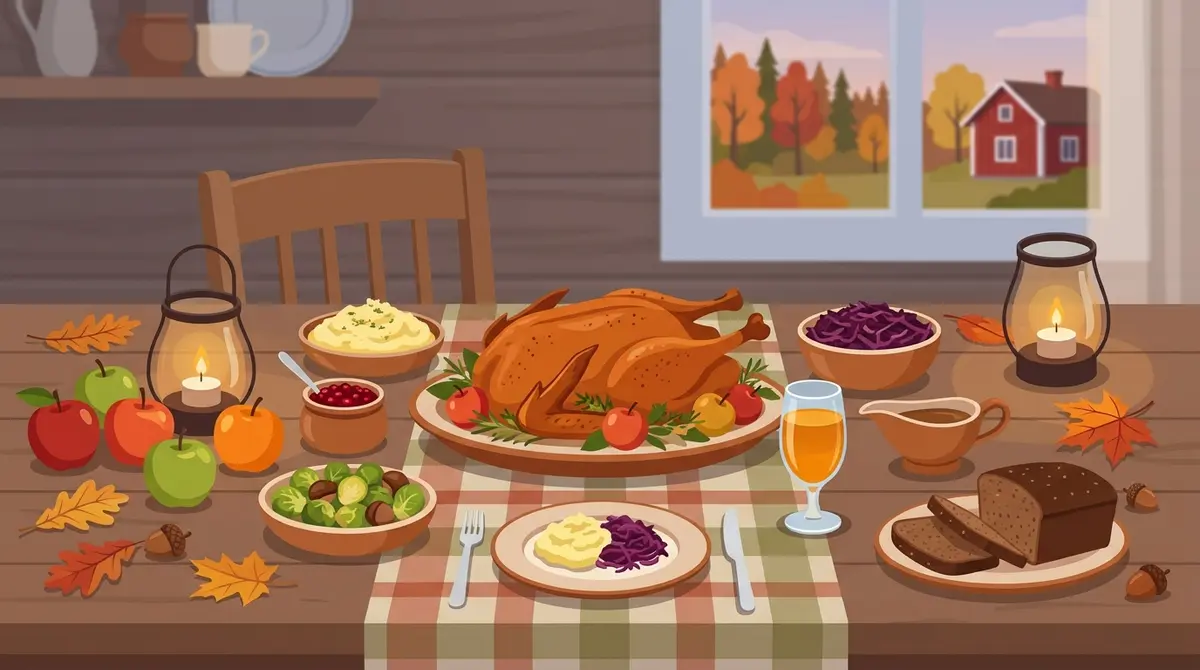
As November arrives in Sweden, the days grow short and the air turns crisp. While many people think Swedish winter dining begins with the Christmas buffet in December, autumn has its own secret feast. Every year on the evening of November 10th, Swedes gather for Mårtensafton (St. Martin's Eve), often called Mårten Gås (Martin Goose). It is an evening dedicated to warm candlelight, good company, and a lavish three-course dinner.
The Story Behind the Goose
The holiday honours Saint Martin of Tours, a fourth-century bishop. Legend says Martin was humble and did not want to become bishop, so he hid in a barn full of geese. The noisy birds honked loudly and gave his hiding place away. As punishment—or perhaps as poetic justice—eating roast goose became a holiday tradition across Europe.
In Sweden, the custom dates back to the sixteenth century among wealthy nobles and clergy. Over time, it became especially deeply rooted in the southern province of Skåne. Southern Sweden has fertile farmland and plenty of water, which made raising geese easy. Today, if you want to experience the most authentic gåsmiddag (goose dinner), you book a table at a classic country inn, known in Swedish as an inn or gästgiveri, in the rolling hills of Skåne.
What Is on the Menu?
A classic gåsmiddag is a rich meal with three very specific courses. It is hearty autumn comfort food at its finest, closely tied to traditional husmanskost.
The traditional starter is svartsoppa (black soup). This is a dark, thick soup made from goose blood and broth, heavily seasoned with fruit purée, ginger, cloves, and allspice. Because the idea of blood soup does not appeal to everyone today, many restaurants politely offer a cup of velvety soup made from mushrooms or root vegetables instead.
Next comes the star of the night: stekt gås (roast goose). The chef roasts the bird slowly until the skin is wonderfully crisp. It is served with rödkål (braised red cabbage), roasted potatoes, Brussels sprouts, stewed prunes, and a rich, dark gravy made from the cooking juices.
Finally, dessert arrives: skånsk äppelkaka (Scanian apple cake). This is not a light sponge cake; it is a dense, buttery dessert made with breadcrumbs or fried rye bread, plenty of tart Swedish apples, sugar, and cinnamon. Swedes serve it warm with a generous pour of vaniljsås (vanilla custard). It is sweet, warming, and the perfect way to finish a chilly November evening.
An Excuse for Autumn Cosiness
November can feel long and dark in the Nordic countries, but Swedes are experts at bringing light indoors. Much like cozy Friday nights at hemma, Mårtensafton gives people a reason to gather around a table with family and friends before the busy holiday rush starts. Many people buy a bird to roast at home, but others reserve tables weeks in advance at historic restaurants in Stockholm, Gothenburg, or Malmö.
If someone invites you to a dinner on November 10th, dress nicely, bring an appetite, and remember to say smaklig måltid (enjoy your meal) before you dig in!
Language corner
Here are useful phrases you can use when talking about holiday meals and dining out in Swedish:
- Ska vi äta gås på söndag? (Shall we eat goose on Sunday?)
- Maten smakar jättegott! (The food tastes delicious!)
- Vill du ha mer sås? (Would you like more sauce?)
- Vad har ni för efterrätt? (What do you have for dessert?)
- Tack för maten! (Thank you for the meal! — standard polite phrase after eating)
- Det här är en gammal tradition. (This is an old tradition.)
Notice how words join together in food names. In fact, learning Swedish compound words makes reading Swedish menus much easier. Here are seven important words from today's post:
| Swedish | English | Example |
|---|---|---|
| en gås | a goose | Vi äter gås i november. (We eat goose in November.) |
| en middag | a dinner | Tack för en trevlig middag. (Thank you for a lovely dinner.) |
| stekt | fried / roasted | Jag vill ha stekt potatis. (I want roast potatoes.) |
| en sås | a sauce / gravy | Såsen är mycket god. (The sauce is very good.) |
| en efterrätt | a dessert | Äppelkaka är en god efterrätt. (Apple cake is a tasty dessert.) |
| en tradition | a tradition | Det är en svensk tradition. (It is a Swedish tradition.) |
| ett ljus | a candle / light | Vi tänder ett ljus på bordet. (We light a candle on the table.) |
Did you know?
While goose is the traditional bird, a full-grown goose can easily feed six to eight people. Because geese are quite large and expensive, many Swedish families today roast a kalkon (turkey) or even a duck for their family dinner at home instead!
Practise this with Kielo
You can practise talking about your favourite foods and holiday meals in a friendly Kielo conversation. Add these vocabulary words to your daily plan to review them whenever you have a spare moment. Maten smakar jättegott!
- Learn Swedish
- Holidays and Celebrations
- Swedish Culture
- Food and Dining
- Swedish Traditions
- Skåne
Practise this Swedish with Kielo
AI conversations, short articles at your level and exercises built around your mistakes.
Download Kielo