
Kierrätys: Read Finnish Waste and Recycling Signs
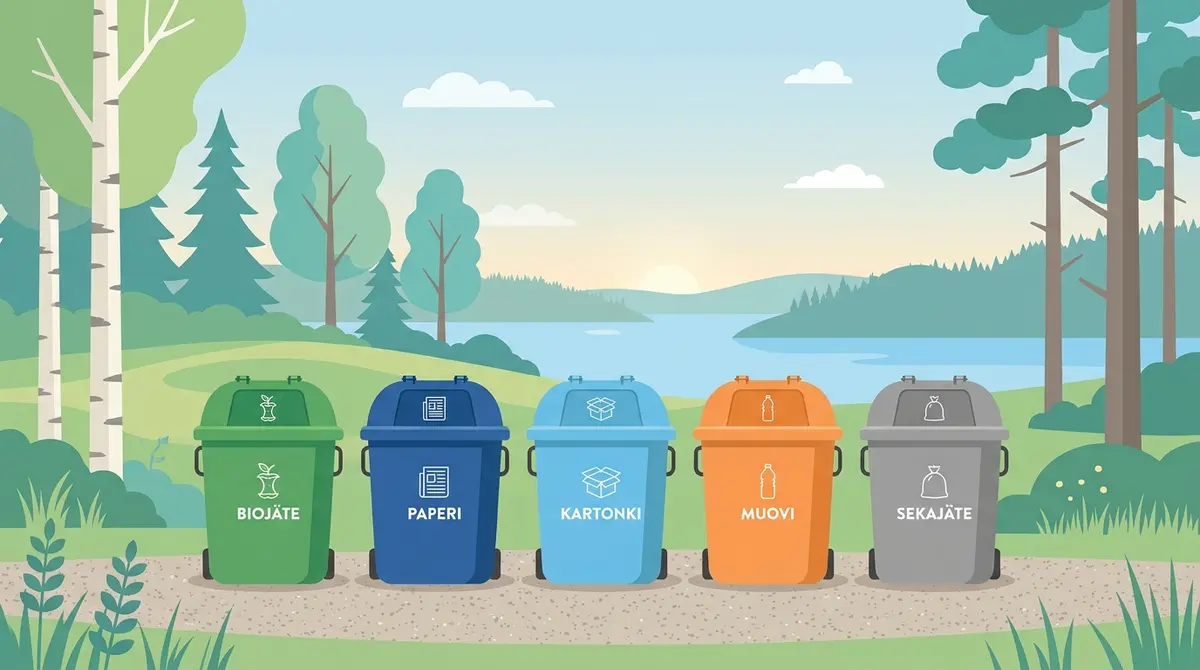
Step into any Finnish apartment courtyard or train station, and you will see a row of neatly organized bins. Finland takes waste sorting very seriously. You will encounter the concept of kierrätys (recycling) on public bins, food packaging, and inside your building's garbage shelter. Learning these everyday words saves you from awkward moments by the bins and gives you practical, real-world Finnish you will use every single day.
The Core Word: Jäte
Most waste bins in Finland use a compound word built on jäte (waste, refuse). Once you know this root, decoding signs becomes much easier:
- sekajäte (mixed waste): This is general household waste that cannot be recycled into specific materials. The word seka means "mixed."
- biojäte (bio-waste, organic waste): Food scraps, coffee grounds, and fruit peels go here. You will often see a reminder to use a biohajoava pussi (biodegradable bag) or a paper bag.
- vaarallinen jäte (hazardous waste): Batteries, chemicals, and paint. You will rarely see this in standard courtyard bins, but rather at dedicated collection points.
A common beginner mistake is mixing up sekajäte (mixed waste) and biojäte (organic waste). Remember that bio- always refers to organic matter from the kitchen or garden, while seka- catches whatever is left over after sorting everything else.
Packaging Materials: Muovi, Kartonki, and Lasi
Finland collects packaging materials separately. Look out for the word pakkaukset (packaging) on bin labels:
- muovipakkaukset (plastic packaging): Often written simply as muovi (plastic). This includes yoghurt cups, bread bags, and clean plastic wrappers.
- kartonkipakkaukset (cardboard / carton packaging): Often labelled kartonki (carton/cardboard) or pahvi (heavy corrugated cardboard). Milk cartons, cereal boxes, and cardboard delivery boxes belong here.
- lasi (glass): If you already read about Finnish glass design, you know this word well! In recycling shelters, lasipakkaukset (glass packaging) means glass jars and non-deposit bottles. Some stations ask you to sort between kirkas lasi (clear glass) and värillinen lasi (coloured glass).
- metalli (metal): Sometimes labelled pienmetalli (small metal items). Canned food tins, aluminium foil, and metal bottle caps go in this bin.
- paperi (paper): Newspapers, flyers, and magazines.
Important distinction: A milk carton belongs in kartonki, not paperi. The paperi bin only accepts clean, dry paper that can be folded like a newspaper or office sheet.
Instructions on the Lids
Recycling bins often feature helpful imperative verbs instructing you on what to do before tossing an item inside:
- Huuhtele (Rinse!): A quick rinse with cold water keeps the bin odour-free.
- Kuivaa (Dry!): Ensure the packaging is not soaking wet.
- Litistä (Flatten! / Crush!): Cardboard boxes take up huge amounts of space unless you flatten them first.
- Irrota korkki (Remove the cap!): Plastic lids on glass jars or milk cartons often belong in a different bin.
You might also spot pantti (deposit) on bottles and cans. Drinks containers marked with a small symbol and the word pantti do not belong in your building's metal or plastic bins. Take them to a pullonpalautus (bottle return) machine at any grocery store to get your cash back!
Key Vocabulary for Finnish Bins
| Finnish | English | Example |
|---|---|---|
| kierrätys | recycling | Kierrätys on helppoa. (Recycling is easy.) |
| roskakatos | waste shelter | Menen roskakatokseen. (I am going to the waste shelter.) |
| roskis | trash can / dustbin (spoken) | Laita se roskikseen. (Put it in the trash can.) |
| sekajäte | mixed waste | Tämä kuuluu sekajätteeseen. (This belongs in mixed waste.) |
| biojäte | organic waste | Banaaninkuori on biojätettä. (A banana peel is organic waste.) |
| kartonki | cardboard / carton | Litistä kartonki aina. (Always flatten cardboard.) |
| lajittele | sort! (imperative) | Lajittele jätteet huolellisesti. (Sort the waste carefully.) |
| pantti | can/bottle deposit | Tässä tölkissä on pantti. (This can has a deposit.) |
Real-Life Culture: The Finnish Roskakatos
In Finnish apartment blocks (taloyhtiöt), all bins are kept in a shared outdoor shed called a roskakatos (waste shelter) or a locked waste room. You usually need your house key to unlock the door.
Finns value keeping this space tidy. Leaving large cardboard boxes unflattened or putting cardboard into the paper bin is seen as poor etiquette. If you are unsure where an item belongs, look at the packaging: most food products in Finland feature small textual guidance on the back, such as Lajittele muovina (Sort as plastic) or Lajittele kartonkina (Sort as cardboard).
Quick Practice
Test your understanding with these three short exercises.
-
Match the item to the right Finnish label:
- A) Empty cardboard cereal box
- B) Leftover apple core
- C) Empty tin of tuna
- Choices: metalli, biojäte, kartonki
-
What does this instruction mean on a cardboard bin?
- Litistä laatikot!
-
True or False:
- A magazine belongs in the kartonki bin.
Answers:
- A = kartonki, B = biojäte, C = metalli
- "Flatten the boxes!" (or "Crush the boxes!")
- False. Magazines belong in paperi (paper).
Practise this with Kielo
Next time you open your Kielo app, practise using everyday action words and household nouns in your conversation lessons. You can add terms like kierrätys and sekajäte to your daily review plan so you feel completely confident whenever you visit the waste shelter. Lajittele jätteet huolellisesti!
- Learn Finnish
- Reading Signs and Labels
- Vocabulary
- Finnish Culture
- Kierrätys
Practise this Finnish with Kielo
AI conversations, short articles at your level and exercises built around your mistakes.
Download Kielo