
Husmanskost: Sweden's Comfort Food Tradition
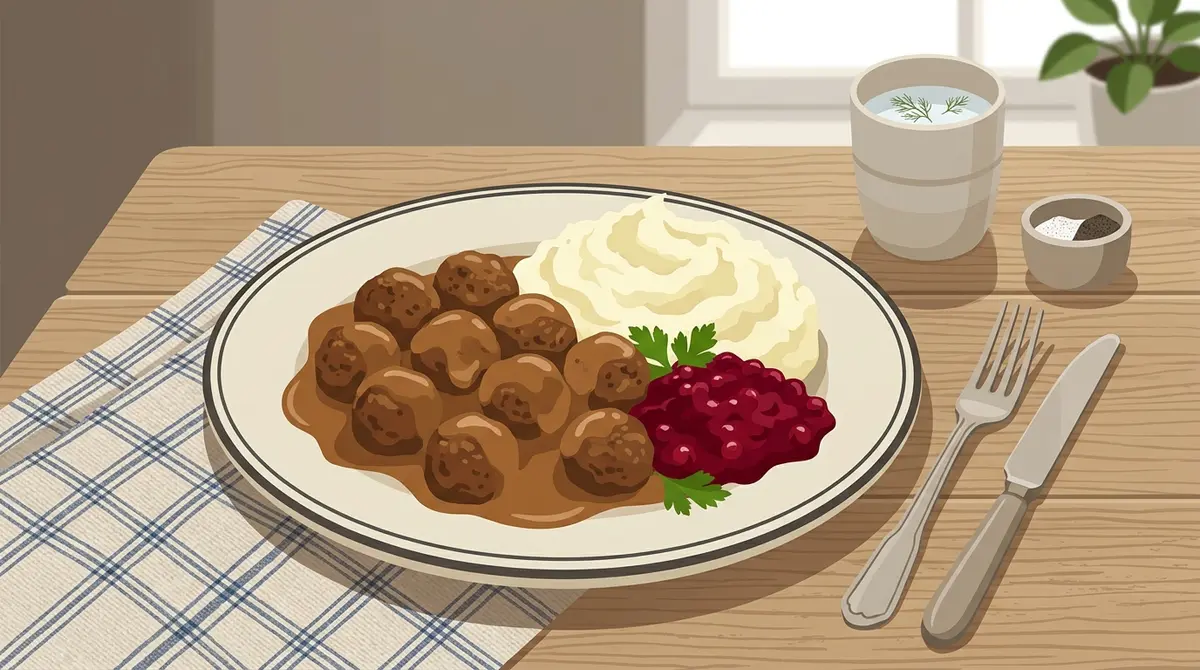
If you walk into a traditional restaurant in Stockholm or Gothenburg at noon, you will see office workers, construction workers, and pensioners all eating the exact same meal. It might be a plate of meatballs with silky mashed potatoes, or roasted pork belly with brown beans. This hearty, unpretentious cooking is known as husmanskost (traditional home-style cooking). It is the soul food of Sweden, built to keep people warm and satisfied through long, dark Nordic winters.
The Roots of the "House Owner's Food"
The word husmanskost comes from older German and Swedish words: husman (a smallholder or cottage owner) and kost (food or fare). If you have read our guide to Swedish compound words, you will recognize how two simple words combine here to mean "everyday food of the house."
Historically, this was simple food for country folk: potatoes, salted pork, root vegetables, pickled fish, and rye bread. Fresh produce was rare between November and May, so Swedish cooks relied on pickling, salting, and fermenting.
Over time, these rural staples moved into city restaurants and royal kitchens. Today, husmanskost represents pride in classic ingredients, cooked with care. It is not fancy food, but it is deeply loved. Even high-end restaurants now serve refined versions of these nostalgic dishes.
Classic Dishes You Need to Try
When you visit Sweden, you will see a few iconic dishes on almost every traditional menu:
- Köttbullar med potatismos (meatballs with mashed potatoes): Served with rich brown gravy, sweet-tart lingonsylt (lingonberry jam), and crisp pressgurka (pressed pickled cucumber).
- Ärtsoppa och pannkakor (pea soup and pancakes): A legendary Thursday tradition. Yellow pea soup cooked with pork is served with mustard, followed by thin Swedish pancakes topped with jam and whipped cream.
- Pyttipanna (diced meat and potatoes): Literally "tiny things in a pan," this is a pan-fried hash of leftover beef, pork, potatoes, and onions, served with a raw egg yolk and pickled beetroot.
- Stekt strömming (fried Baltic herring): Fresh herring fillets coated in breadcrumbs, fried in butter, and served with mashed potatoes and melted butter.
- Kåldolmar (cabbage rolls): Minced meat wrapped in cabbage leaves, roasted until golden and served with boiled potatoes and lingonberries.
Balance is central to every dish. Swedish cooking loves to combine rich, salty meats with sour pickles and sweet berries. That little spoonful of red lingonberries next to savoury meatballs is not just decoration—it cuts through the richness of the cream sauce.
Where to Eat Husmanskost: The "Dagens Lunch" Tradition
The best time to experience husmanskost like a local is during weekday lunch. Between 11:00 and 14:00, restaurants all over Sweden offer dagens lunch (the lunch of the day) or dagens rätt (today's dish).
For a set price—usually between 110 and 150 Swedish kronor—you receive a warm main course, access to a salladsbuffé (salad buffet with shredded cabbage, carrots, and bread), water, and kaffe på maten (coffee after the meal).
Ordering is easy and friendly. You can use the polite phrase you learned in our post on how to order in Swedish: Kan jag få dagens rätt, tack? (May I have the lunch of the day, please?).
Language Corner
Here are useful phrases you can use when talking about traditional Swedish food:
- Vad är dagens rätt? (What is the dish of the day?)
- Det smakar jättegott! (It tastes delicious!)
- Jag tar köttbullar med potatismos. (I will have meatballs with mashed potatoes.)
- Ingår kaffe på maten? (Is coffee after the meal included?)
- Tack för maten! (Thank you for the meal! — Swedes always say this after finishing a meal.)
Here are essential words for reading a Swedish menu:
| Swedish | English | Example |
|---|---|---|
| en husmanskost | traditional comfort food | Jag älskar svensk husmanskost. (I love Swedish comfort food.) |
| en potatis | a potato | Vill du ha kokt potatis? (Do you want boiled potatoes?) |
| ett potatismos | mashed potatoes | Maten serveras med potatismos. (The food is served with mashed potatoes.) |
| lingon | lingonberries | Vi plockar lingon i skogen. (We pick lingonberries in the forest.) |
| en sås | a sauce / gravy | Såsen är mycket god. (The sauce is very good.) |
| en tallrik | a plate | En tallrik med soppa, tack. (A plate of soup, please.) |
| mätt | full / satisfied | Jag är väldigt mätt nu. (I am very full now.) |
Did You Know?
The tradition of eating ärtsoppa (pea soup) on Thursdays dates back to the Middle Ages. In Catholic Sweden, Friday was a fast day, so people ate a heavy, filling meal of yellow peas and salted pork on Thursday evening to prepare for the fast. Even though Sweden became Protestant centuries ago, Thursday pea soup and pancakes remain a fixture in homes, restaurants, and the Swedish armed forces.
Practise This with Kielo
You can practise ordering dagens rätt and talking about your favourite dishes right inside Kielo. Use our interactive conversations to order food with confidence, and review these new dining words in your daily study plan. Smaklig måltid! (Enjoy your meal!)
- Learn Swedish
- Husmanskost
- Food and Dining
- Swedish Culture
- Swedish Vocabulary
Practise this Swedish with Kielo
AI conversations, short articles at your level and exercises built around your mistakes.
Download Kielo