
Ursäkta or Förlåt: Say Excuse Me and Sorry in Swedish
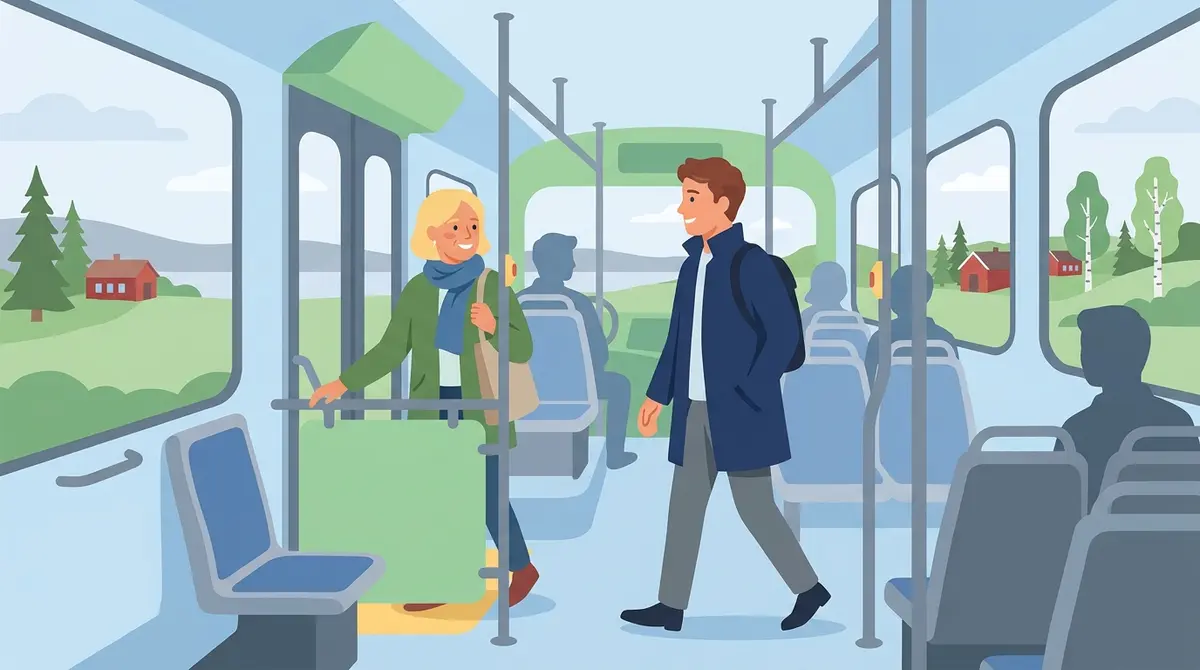
Have you ever bumped into someone on the bus in Stockholm, or needed to squeeze past someone in a supermarket aisle, and frozen for a second? In English, "excuse me" and "sorry" come out almost without thinking. Swedish has two main words for these moments: ursäkta (excuse me) and förlåt (sorry). Picking the right one makes you sound polite and natural.
Ursäkta: Getting Attention and Squeezing Past
Ursäkta (excuse me) comes from the verb ursäkta (to excuse). Use it when you want someone's attention, or when you are about to cause a small inconvenience. It is the word you say before or while you bother someone:
- Getting someone's attention: Ursäkta! (Excuse me!)
- Asking for help in a shop: Ursäkta, var finns kaffet? (Excuse me, where is the coffee?)
- Getting past someone in a crowded space: Ursäkta, får jag komma förbi? (Excuse me, can I get past?)
You can also use ursäkta when you didn't hear what someone said:
- Ursäkta, vad sa du? (Sorry, what did you say?)
A pronunciation tip: in most of Sweden, the r and s in ursäkta blend into one sh-like sound, so it sounds roughly like oo-shek-ta.
Förlåt: When You Did Something Wrong
Förlåt (sorry) is an apology. Use it after something has happened, when you regret what you did.
- You step on someone's foot: Oj, förlåt! (Oh, sorry!)
- You arrive late to a meeting or a fika: Förlåt att jag är sen! (Sorry I'm late!)
- You spill some water: Förlåt, det var inte meningen. (Sorry, I didn't mean to.)
For a bigger apology, say förlåt mig (forgive me) or jag är hemskt ledsen (I am terribly sorry). In writing or more formal situations, you will also see jag ber om ursäkt (I apologise). For everyday slips, a simple förlåt is plenty.
One more use: Förlåt? with a rising tone also means "Sorry?" when you didn't catch what someone said, just like Ursäkta?. Among friends, people often just say Va? (What?).
The Overlap: What If You Bump into Someone?
What if you bump into someone in a shop aisle while checking what things cost?
Here Swedes use both. You will hear:
- Oj, förlåt! (Oh, sorry!) — very common and friendly.
- Ursäkta! (Excuse me!) — also fine.
Notice the little word oj (oh / oops). Swedes often add oj when something sudden happens:
- Oj, ursäkta! (Oops, excuse me!)
- Oj då, förlåt! (Oh dear, sorry!)
And if someone says ursäkta or förlåt to you, the easiest replies are det är lugnt (it's fine) or ingen fara (no problem, literally "no danger").
Useful Apology and Polite Phrases
| Swedish | English | Example |
|---|---|---|
| ursäkta | excuse me | Ursäkta, kan du hjälpa mig? (Excuse me, can you help me?) |
| ursäkta mig | excuse me (getting past) | Ursäkta mig, får jag komma förbi? (Excuse me, can I get past?) |
| förlåt | sorry | Förlåt, jag glömde bort det. (Sorry, I forgot about it.) |
| jag ber om ursäkt | I apologise | Jag ber om ursäkt för förseningen. (I apologise for the delay.) |
| oj! | oops! / oh! | Oj, tappade jag den? (Oops, did I drop it?) |
| ingen fara | no problem | Ingen fara, det gör inget! (No problem, it doesn't matter!) |
| det är lugnt | it's fine | Det är helt lugnt! (That's totally fine!) |
| förlåt att jag är sen | sorry I'm late | Förlåt att jag är sen, tåget var försenat. (Sorry I'm late, the train was delayed.) |
| vad sa du? | what did you say? | Ursäkta, vad sa du? (Sorry, what did you say?) |
Ursäkta, kan du …? is the standard way to ask a stranger for help. For more on kan and vill, see our guide to Swedish modal verbs.
How Swedes Apologise in Real Life
Swedes are polite, but they say sorry less often than many English speakers. In English, "sorry" often works as a filler, for example before asking a question. In Swedish, if you didn't do anything wrong, you don't need förlåt.
If someone is standing in front of the milk in the shop, say ursäkta, not förlåt. A short ursäkta and a smile is all you need.
When someone bumps into you on the tunnelbana (metro) or drops something, a quick ingen fara or det är lugnt puts them at ease.
Quick Practice
Choose the best word for each sentence: ursäkta, förlåt or ingen fara.
- You want to ask a stranger on the street what time it is.
"____, vad är klockan?" - You knock over a glass of water on a friend's table.
"Oj, ____! Jag torkar upp det." - A stranger bumps into your arm on the train and says "Förlåt!" You want to say "No problem!"
"____, det gjorde inget!"
Answers
- Ursäkta (you want someone's attention)
- Förlåt (you did something and want to apologise)
- Ingen fara (you reassure them it's no problem)
Practise This with Kielo
You can practise ursäkta and förlåt in a Kielo conversation and review them in your daily study plan. Ursäkta, var ligger stationen? (Excuse me, where is the station?)
- Learn Swedish
- Common Expressions
- Swedish Vocabulary
- Swedish Phrases
- Beginner Swedish
Practise this Swedish with Kielo
AI conversations, short articles at your level and exercises built around your mistakes.
Download Kielo