Swedish Signs: Read Öppet, Stängt, Dra, and Tryck
Have you ever pushed a door with all your strength in front of a busy café, only to realize you were supposed to pull? Or stood outside a bakery wondering if the lights were on for customers or just for the staff? Reading public signs is one of the quickest ways to feel independent when you visit or move to Sweden. Luckily, Swedish signs are simple, direct, and use patterns that are easy to remember once you know what to look for.
Door Signs: Dra, Tryck, Ingång, and Utgång
The two words you see on glass doors across the country are dra (pull) and tryck (push). Learners mix these up constantly, but here is a simple trick:
Think of the English word drag. When you drag something, you pull it towards you. That will help you remember that dra means pull! For tryck, think of putting pressure on the door to push it forward.
When you walk into a train station or shopping centre, look for these navigation words:
- Ingång (entrance) — built from in (in) and gång (path or corridor).
- Utgång (exit) — built from ut (out) and gång.
- Nödutgång (emergency exit) — the word nöd means distress or emergency.
Next time you visit a Swedish town for a coffee break and a treat—perhaps reading about Fika: The Swedish Art of the Coffee Break before you go—keep your eyes on the door handles.
Store Hours: Öppet, Stängt, and Opening Times
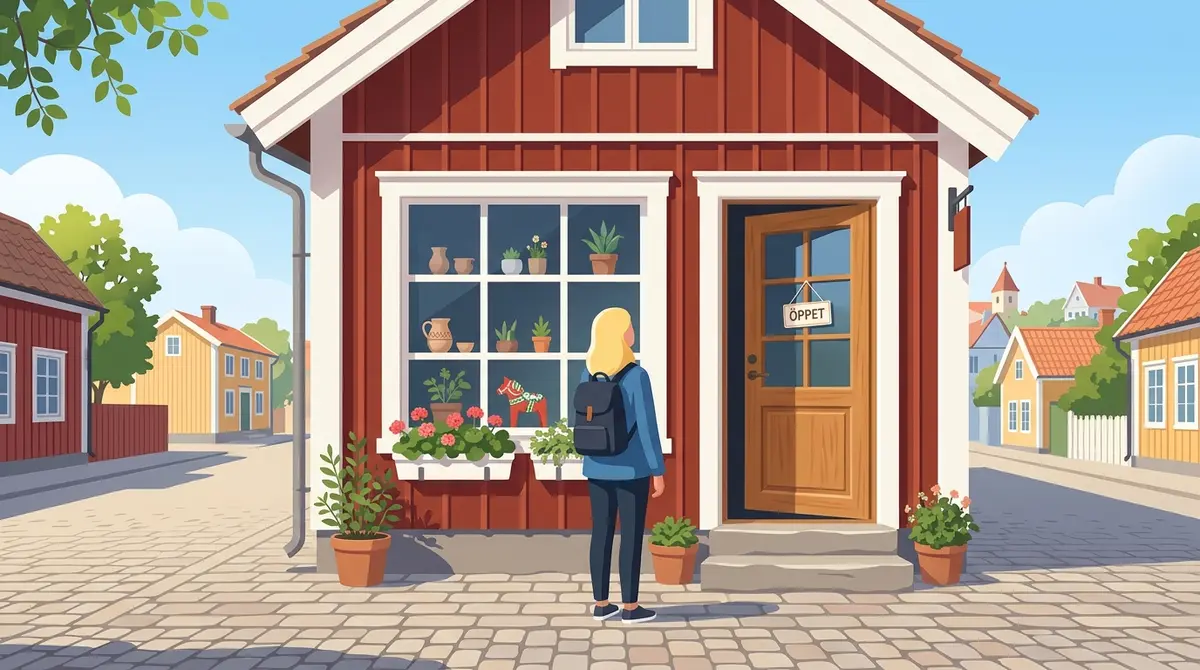
Once you reach the door, you need to know if the shop is actually welcoming customers:
- Öppet (open)
- Stängt (closed)
On door windows, you will often spot a small board titled öppettider (opening hours). Swedish opening hours follow a very standard format that is good to know:
- Numbers listed by themselves (such as 10–18) mean Monday through Friday (vardagar, weekdays).
- Numbers in parentheses, like (10–15), usually show Saturday opening hours.
- Numbers shown in red or with a red asterisk refer to Sundays and public holidays (söndagar och helgdagar).
If you want to feel confident reading the clock on those signs, check out our guide on Vad är klockan? How to Tell Time in Swedish. Sometimes a smaller sign says lunchstängt (closed for lunch), which tells you the shopkeeper will return in an hour.
Shopping Signs: Rea, Kassa, and Payments
Inside a boutique or supermarket, a few key words catch every shopper's eye.
The most famous word in Swedish retail is rea (sale). It is an old abbreviation of realisation (clearance sale). When you see mellandagsrea after Christmas, or simply stor rea (big sale), discounts are waiting. You will also see erbjudande (special offer) and fynd (bargain).
When you are ready to pay, head towards the kassa (checkout or register). In modern Sweden, you will almost certainly see a sign saying:
- Kontantfri (cash-free) or endast kort (card only)
- Kortbetalning (card payment)
- Swish (Sweden’s popular mobile payment app)
Useful Swedish Signs and Labels
Here are eight essential words and signs you will encounter every day in Sweden:
| Swedish | English | Example |
|---|---|---|
| Dra | Pull | Dra i dörren. (Pull the door.) |
| Tryck | Push | Tryck på knappen. (Push the button.) |
| Öppet | Open | Vi har öppet till klockan sex. (We are open until six o'clock.) |
| Stängt | Closed | Tyvärr, det är stängt idag. (Unfortunately, it is closed today.) |
| Ingång | Entrance | Huvudingången är runt hörnet. (The main entrance is around the corner.) |
| Utgång | Exit | Följ skylten mot utgången. (Follow the sign towards the exit.) |
| Rea | Sale | Det är rea i butiken. (There is a sale in the shop.) |
| Kontantfri | Cash-free | Det här kaféet är kontantfritt. (This café is cash-free.) |
Real Life in Sweden: Queues and Cashless Doors
Sweden has two famous cultural habits you will read on signs everywhere: queue systems and going cashless.
At pharmacies (apotek), postal counters, and government offices, do not look for a physical line of people. Look for a small red or blue dispenser with a sign that says ta en nummerlapp (take a queue ticket) or kölapp (queue slip). Everyone takes a slip of paper with a printed number, then watches a screen showing nu betjänas nummer... (now serving number...).
Payment signs are equally important. Very few small businesses in Sweden accept paper bills or coins anymore. If you see a sticker with a crossed-out coin or bank note and the word kontantfri, be ready with a debit card, credit card, or your smartphone.
Quick Practice
Test your sign-reading skills with these three quick questions.
-
You walk up to a glass door at a bakery and see the word dra. What should you do?
- A) Push the door forward
- B) Pull the door towards yourself
- C) Knock and wait
-
A shop window has a sign reading Stängt på söndagar. What does this mean?
- A) Open on Sundays
- B) Closed on Saturdays
- C) Closed on Sundays
-
You need to leave a metro station. Which sign should you follow?
- A) Ingång
- B) Utgång
- C) Rea
Answers:
- B — Dra means pull.
- C — Stängt på söndagar means closed on Sundays.
- B — Utgång means exit (ut = out).
Practise This with Kielo
You can practise spotting these signs, reading opening hours, and asking shopkeepers questions inside your Kielo conversation practice. Add them to your daily plan so you can review door signs and shopping words before your next trip.
Välkommen in, vi har öppet! (Welcome in, we are open!)
- Learn Swedish
- Reading Signs
- Swedish Signs
- Swedish Vocabulary
- Travel Sweden
- A1 Swedish
Practise this Swedish with Kielo
AI conversations, short articles at your level and exercises built around your mistakes.
Download Kielo