
Minulla on or Minä olen? Stop This Finnish Mistake
When you start learning Finnish, your brain tries to translate directly from English. That makes total sense, but English and Finnish see the world quite differently. One of the most common—and occasionally embarrassing—traps for beginners is mixing up minä olen (I am) and minulla on (I have / on me is).
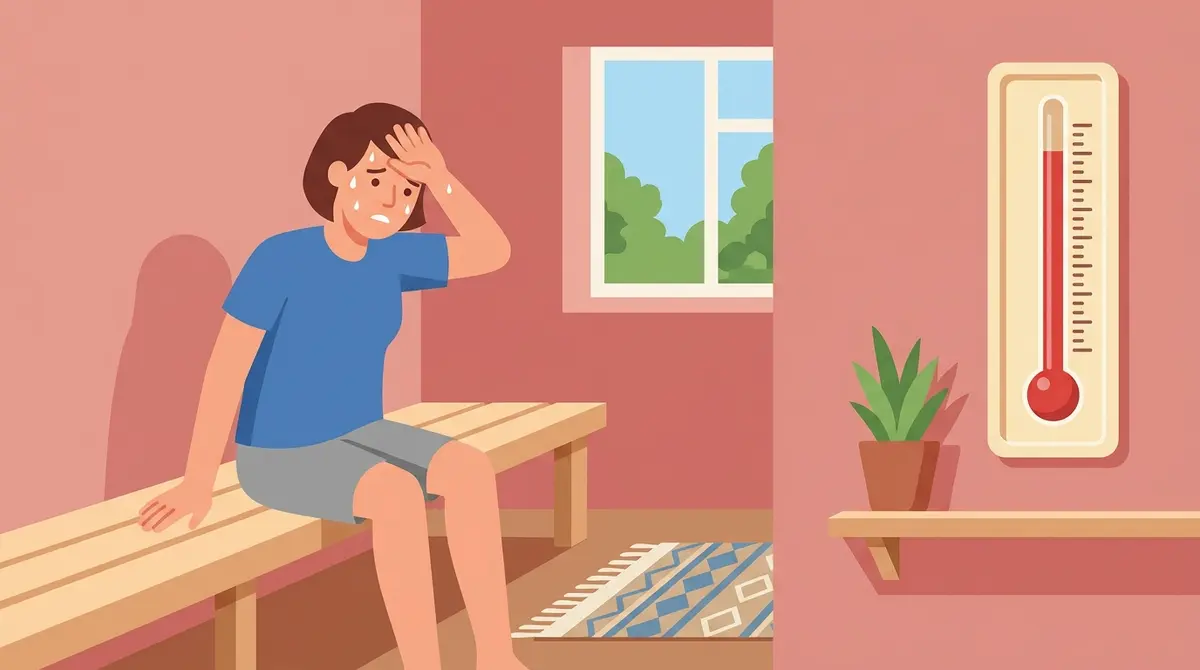
Saying the wrong one can change your sentence from "I feel hot" to "I am sexy," or from "I am cold" to "I am an unfeeling, heartless person." Let's look at why this happens and how you can get it right every time.
Why Finnish has no verb for "to have"
Finnish does not have an exact equivalent for the English verb "to have." Instead, Finnish uses an "ownership structure" (habitiivirakenne). It takes the person, puts them into the adessive case with the ending -lla or -llä (which literally means "on" or "at"), and adds on (is):
- Minulla on koira. (I have a dog. / Literally: On me is a dog.)
- Sinulla on avain. (You have a key.)
- Hänellä on auto. (He/She has a car.)
Because Finnish uses this structure for possession, it also uses it for personal physical states and needs. In English, you are hungry, thirsty, or cold. In Finnish, hunger or coldness is something that visits you or sits on you.
When you want to describe an internal physical feeling, use minulla on:
- Minulla on nälkä. (I am hungry. / Literally: I have hunger.)
- Minulla on jano. (I am thirsty. / Literally: I have thirst.)
- Minulla on kiire. (I am in a hurry. / Literally: I have hurry.)
If you say minä olen nälkä, you are literally telling someone: "I am hunger." They will understand what you mean, but it sounds like you are a mythical villain from a fantasy novel!
The awkward mistakes: Hot, cold, and sick
Here is where direct translation becomes truly tricky. Beginners often want to describe the temperature they feel.
If you are shivering on a chilly winter day, you might think: "I am cold = minä olen kylmä." But in Finnish, kylmä (cold) attached directly to a person with olen describes personality, not body temperature. Minä olen kylmä means "I am an emotionally cold, distant person."
Instead, say:
- Minulla on kylmä. (I am cold / I feel cold.)
The mistake becomes even funnier when the weather gets warm. If the sauna is burning hot, never say minä olen kuuma unless you are feeling very confident about your looks! In colloquial Finnish, just like in English slang, kuuma means attractive or sexy.
To say you feel overheated, always say:
- Minulla on kuuma. (I am hot / I feel hot.)
What about when you feel unwell? Here, you use olen:
- Minä olen sairas. (I am sick.)
- Olen väsynyt. (I am tired.)
Notice the difference: sairas (sick) and väsynyt (tired) are normal adjectives that describe your current identity or physical condition, so you link them with olen. But sensations like fever or a headache belong to the "having" category:
- Minulla on kuumetta. (I have a fever.)
- Minulla on päänsärky. (I have a headache.)
When the winter frost strikes—what Finns call pakkanen—you will definitely want to know the difference before stepping outside!
Quick summary table
Here are the most common phrases that trap English speakers. Notice which ones take minä olen and which take minulla on:
| Finnish | English | Example |
|---|---|---|
| Minulla on nälkä. | I am hungry. | Minulla on nälkä, syödään! (I am hungry, let's eat!) |
| Minulla on jano. | I am thirsty. | Minulla on jano, haluan vettä. (I am thirsty, I want water.) |
| Minulla on kylmä. | I feel cold. | Minulla on kylmä tässä huoneessa. (I feel cold in this room.) |
| Minulla on kuuma. | I feel hot. | Avaa ikkuna, minulla on kuuma. (Open the window, I feel hot.) |
| Minulla on kiire. | I am in a hurry. | Anteeksi, minulla on kiire bussiin. (Sorry, I'm in a hurry to catch the bus.) |
| Minulla on aikaa. | I have time. | Minulla on aikaa huomenna. (I have time tomorrow.) |
| Olen väsynyt. | I am tired. | Menen nukkumaan, olen väsynyt. (I am going to sleep, I am tired.) |
| Olen valmis. | I am ready. | Oletko valmis? Minä olen valmis! (Are you ready? I am ready!) |
How this works in everyday Finnish life
In Finland, people value clarity and directness. You will hear these phrases constantly throughout the day, especially during your aamurutiini or at the workplace.
In casual spoken Finnish (puhekieli), people often shorten these pronouns:
- Minulla on often becomes mulla on.
- Sinulla on becomes sulla on.
- Minä olen becomes mä oon.
So at a café or lunch table, a colleague might casually say: Mulla on hirveä nälkä! (I'm terribly hungry!). Or if someone opens a window in November, someone else might immediately protest: Älä avaa, täällä on kylmä ja mulla on vilu! (Don't open it, it's cold in here and I have the chills!).
Notice that Finns use minulla on whenever they feel an external condition affecting them. If you remember that hunger, thirst, heat, and cold are visitors acting on your body, the grammar will fall into place naturally.
Quick practice
Choose the correct form (olen or minulla on) for each sentence.
-
"I feel cold."
___ kylmä. -
"I am tired."
___ väsynyt. -
"I am hungry."
___ nälkä.
Answers:
- Minulla on kylmä. (Never olen kylmä!)
- Olen väsynyt. (Or Minä olen väsynyt.)
- Minulla on nälkä. (Hunger is something you have.)
Practise this with Kielo
You can practise choosing between minulla on and minä olen in your daily conversation workouts in Kielo. Add these physical feeling phrases to your daily review plan so you never accidentally tell your Finnish friends that you are hot instead of warm! Start your next chat with confidence: Minulla on nälkä, mennäänkö syömään? (I am hungry, shall we go eat?)
- Learn Finnish
- Mistakes Beginners Make
- Finnish Grammar
- Finnish Vocabulary
- Beginner Finnish
Practise this Finnish with Kielo
AI conversations, short articles at your level and exercises built around your mistakes.
Download Kielo