
Karjalanpiirakka: The Story of Finland's Pie
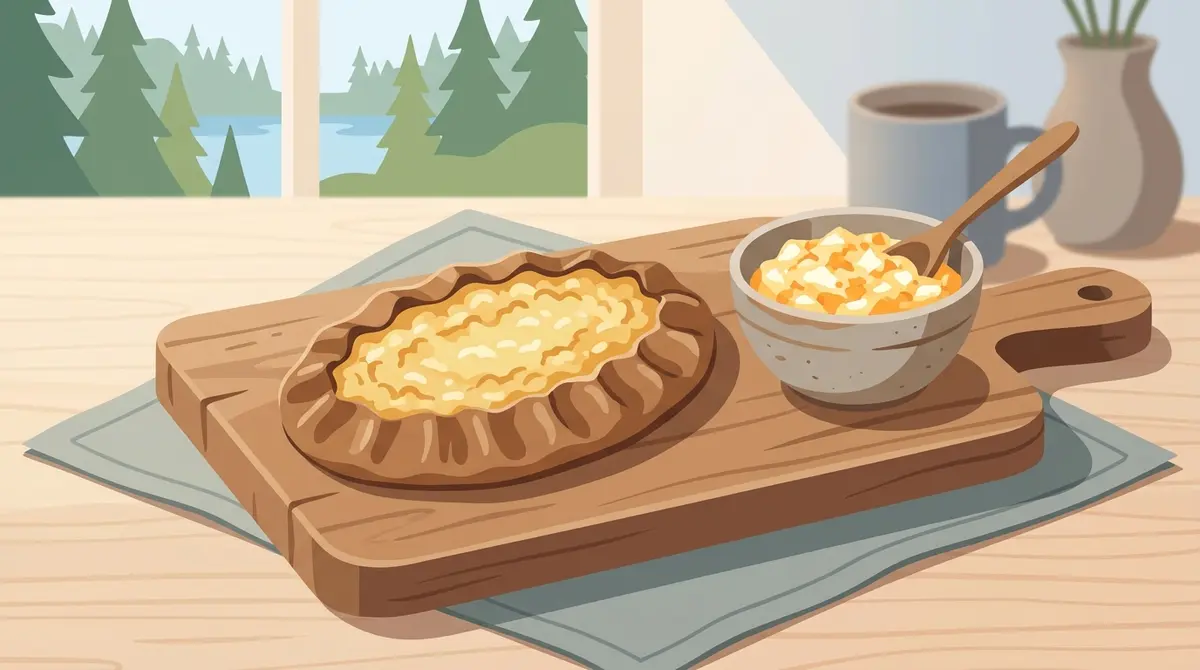
Walk into any bakery, grocery store, or hotel breakfast in Finland, and you will spot small, boat-shaped pastries with dark, crimped edges and a pale filling. This is karjalanpiirakka (Karelian pie or Karelian pasty). It is crunchy on the outside, creamy on the inside, and deeply comforting on a cold day. For many Finns, the smell of warm rye and toasted rice porridge instantly brings back memories of home and family celebrations.
What is a Karelian pie?
The traditional pastry comes from Karelia, a historical region in eastern Finland. The crust is rolled out paper-thin using mostly rye flour (ruisjauho), water, and salt. Then, a dollop of thick rice porridge (riisipuuro) is placed in the centre. The baker pinches the edges together with their thumbs in a signature crimping pattern called rypytys (crimping).
Once baked in a scorching-hot oven, the pies are dipped in or brushed with hot milk and melted butter to soften the crust. Long ago, before rice became common in Finland during the nineteenth century, people filled the crust with barley (ohra) or mashed potato (peruna). Today, while you can still find potato pies (perunapiirakka) and barley pies (ohrapiirakka), the rice version reigns supreme across the entire country.
How Finns eat them: Warm and with munavoi
If you want to enjoy a karjalanpiirakka like a local, you must try it with munavoi (egg butter). This simple spread is made by mashing hard-boiled eggs with soft butter and a pinch of salt. When you spread munavoi over a piping-hot pie, the butter melts into the rice filling, creating pure comfort food.
Finns eat Karelian pies at almost any time of the day. They are a staple of a cozy Finnish morning routine alongside a steaming mug of coffee. They appear as a quick välipala (snack) during school or work breaks, and Finns also serve miniature cocktail versions at celebrations, including late-autumn pikkujoulut parties. You can easily grab one wrapped in paper from any supermarket bakery shelf and eat it on the go.
Karjalanpiirakka vs. riisipiirakka
Have you ever noticed two different labels in Finnish supermarkets: karjalanpiirakka and riisipiirakka (rice pasty)? There is a real legal difference between the two names.
In 2003, the European Union granted karjalanpiirakka Traditional Speciality Guaranteed (TSG) status. Under EU rules, a pie can only be officially sold as karjalanpiirakka if at least half of the flour used in the crust is rye, and the pie follows the traditional recipe. If a commercial bakery uses mostly wheat flour to make the crust softer or cheaper to produce, the product must be labeled simply as riisipiirakka. So if you want the authentic taste and chew of rye, look for the word karjalanpiirakka on the package!
Language corner
Here are useful phrases for ordering or talking about Karelian pies in Finnish:
- Haluaisin kaksi karjalanpiirakkaa, kiitos. (I would like two Karelian pies, please.)
- Lämmitetäänkö piirakka? (Shall I heat the pie? / Would you like the pie heated?)
- Joo, lämmitä vain! (Yes, please heat it!)
- Syödäänkö piirakka munavoin kanssa? (Is the pie eaten with egg butter?)
- Nämä ovat uunituoreita. (These are fresh from the oven.)
Here are seven essential words connected to this Finnish classic:
| Finnish | English | Example |
|---|---|---|
| piirakka | pie / pasty | Piirakka on lämmin. (The pie is warm.) |
| riisipuuro | rice porridge | Keitän riisipuuroa. (I am cooking rice porridge.) |
| ruiskuori | rye crust | Ruiskuori on rapea. (The rye crust is crispy.) |
| munavoi | egg butter | Munavoi on helppo tehdä. (Egg butter is easy to make.) |
| uunituore | fresh from the oven | Tämä leipä on uunituore. (This bread is fresh from the oven.) |
| välipala | snack | Otan pienen välipalan. (I take a small snack.) |
| leipoa | to bake | Mummo leipoo piirakoita. (Grandma bakes pies.) |
Did you know?
Traditionally, experienced Karelian bakers could identify who made each pie simply by looking at the crimping pattern (rypytys), because each baker's thumb strokes created a unique personal signature.
Practise this with Kielo
Ready to talk about food like a local? You can practise these food words and phrases in everyday dialogues with your AI conversation tutor in Kielo, and review them in your daily practice plan. Start by testing your skills with this simple phrase: Haluaisin kaksi karjalanpiirakkaa, kiitos.
- Learn Finnish
- Food and Dining
- Finnish Culture
- Finland
- Vocabulary
Practise this Finnish with Kielo
AI conversations, short articles at your level and exercises built around your mistakes.
Download Kielo