
Loska and Räntä: Finnish Words for Autumn Slush
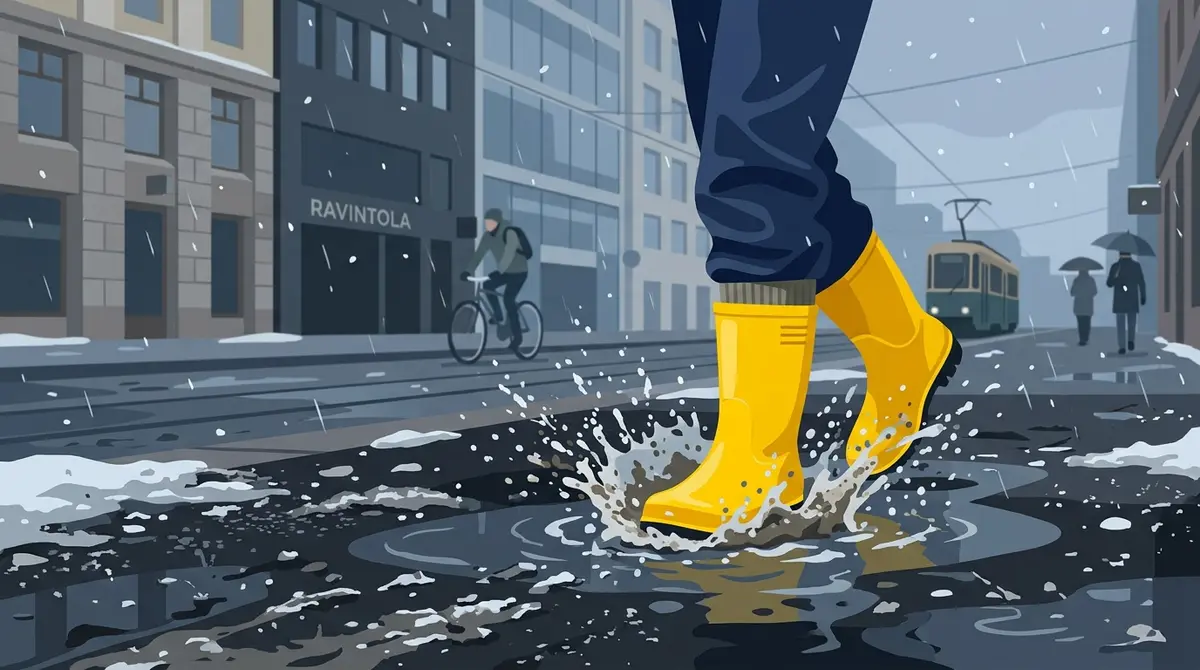
November has arrived in Finland. The colorful leaves have fallen, the sun sets early, and a unique seasonal phenomenon takes over the streets: a mixture of melting snow, rain, and mud. While many languages make do with a single word like "slush," Finnish offers a much richer vocabulary for this chilly time of year.
Talking about the weather is the ultimate Finnish conversation starter. If you learn how to describe these messy late-autumn days, you will instantly connect with locals who are enduring the wet sidewalks right beside you.
Räntä vs. Loska: Sky vs. Ground
To describe freezing November weather accurately, you need to know where the wet mess is located. Finnish distinguishes between what is falling from the sky and what is already sitting under your boots.
Räntä (sleet or wet snow) comes from above. It is that half-frozen precipitation that hits your face on a windy day. When you want to say it is sleeting, you use the verb sataa (to rain / to fall as precipitation) followed by the partitive form räntää:
- Ulkona sataa räntää. (It is sleeting outside.)
- Tänään tulee räntää ja vettä. (Today sleet and rain are coming.)
Once that wet snow hits the ground and mixes with dirt, water, and city dust, it turns into loska (slush). You will often see this word used in the partitive form after words like paljon (a lot of):
- Kadulla on paljon loskaa. (There is a lot of slush on the street.)
- If you want to talk about how you feel about it, you can review how to share your preferences in our guide on expressing likes and dislikes: En pidä loskasta. (I do not like slush.)
A simple memory trick: räntä falls like rain (both start with the letter r), while loska lies low on the ground (both start with l).
The Magic Word: Keli
In English, we usually talk about "the weather" in general. In Finnish, there is an important distinction between sää (weather in the atmosphere) and keli (weather conditions on the ground or road).
When snow, rain, and ice hit the ground, the keli changes quickly:
- loskakeli (slushy road conditions)
- huono keli (bad road conditions)
- liukas keli (slippery road conditions)
Notice how Finnish combines words to describe these specific situations. You can learn more about how words snap together in our guide to compound nouns.
When walking or driving in November, you will hear this phrase constantly: Ole varovainen, ulkona on liukasta! (Be careful, it is slippery outside!). The word liukas (slippery) appears in the partitive, liukasta, because the sentence describes a general condition (on liukasta, "it is slippery").
Dressing for the Slush: Varusteet
Finns love the outdoors, even when the sidewalks resemble a gray soup. The secret is having the right gear, known in Finnish as varusteet (gear / equipment).
Here are three items you will see everywhere in Finland during November:
- kumisaappaat (rubber boots): Essential footwear for wading through deep puddles.
- nastakengät (studded shoes): Shoes with small metal studs on the soles to grip icy patches hiding under the slush.
- kurahousut (mud pants / waterproof overalls): The famous rubber trousers worn by every Finnish child at daycare.
If you step into an unexpectedly deep puddle, you can simply sigh and say: Sukkani ovat aivan märät! (My socks are completely wet!).
Useful Slush and Sleet Words
Here are eight essential words and phrases for surviving late autumn in Finland:
| Finnish | English | Example |
|---|---|---|
| räntä | sleet, wet snow | Taivaalta sataa kylmää räntää. (Cold sleet is falling from the sky.) |
| loska | slush (on the ground) | Kengät ovat täynnä loskaa. (The shoes are full of slush.) |
| sataa räntää | to sleet | Huomenna sataa räntää. (Tomorrow it will sleet.) |
| keli | conditions underfoot / on roads | Ajan varovasti, koska keli on huono. (I drive carefully because conditions are bad.) |
| loskakeli | slushy conditions | Marraskuussa on usein loskakeli. (In November, conditions are often slushy.) |
| liukas | slippery | Tie on todella liukas. (The road is really slippery.) |
| märkä | wet | Maa on kylmä ja märkä. (The ground is cold and wet.) |
| kumisaappaat | rubber boots | Otan kumisaappaat mukaan. (I will take rubber boots with me.) |
How It Works in Real Life
Finns have embraced their messy weather with a good dose of humor. The big startup and tech conference held in Helsinki every November is called Slush, the English word for exactly this half-melted snow. The name is a joke about the least glamorous time of year in the Nordic capital.
There is also a well-known Nordic saying: Ei ole huonoa säätä, on vain huonoja vaatteita (There is no bad weather, there are only bad clothes). When you walk past daycares in November, you will see dozens of small children happily rolling in the mud and wet snow wearing their bright kurahousut.
Instead of hiding indoors until spring, join your Finnish neighbors, pull on a sturdy pair of kumisaappaat, and embrace the season!
Quick Practice
Test what you have learned about autumn weather in Finnish. Choose the right word for each sentence:
-
Look out the window! It is sleeting: "Ulkona sataa ______."
a) loskaa
b) räntää
c) saappaat -
Walk carefully because the wooden bridge is slippery: "Silta on ______."
a) liukas
b) märät
c) räntä -
The street is full of gray, half-melted snow: "Kadulla on paljon ______."
a) räntä
b) loskaa
c) ilmaa
Answers:
- b) räntää (Precipitation coming from the sky is räntä; with sataa, use the partitive räntää.)
- a) liukas (Liukas means slippery.)
- b) loskaa (The wet mush on the ground is loska; after paljon, use the partitive form loskaa.)
Practise this with Kielo
You can practise talking about the autumn chill and describing messy weather in your next Kielo conversation. Add these words to your daily plan so you can recognize them the next time you check a Finnish weather forecast. Start your practice today by repeating this handy warning: Ole varovainen, ulkona on liukasta!
- Learn Finnish
- Weather and Seasons
- Finnish Vocabulary
- Everyday Finnish
- Winter in Finland
- Autumn in Finland
Practise this Finnish with Kielo
AI conversations, short articles at your level and exercises built around your mistakes.
Download Kielo