
Navigating Finnish Nouns: 'A' Cat, 'The' Cat (No Articles!)
Navigating Finnish Nouns: How to Talk About 'A' Cat and 'The' Cat Without Articles
Have you ever wondered how to say "a cat" or "the cat" in Finnish when there are no words for "a," "an," or "the"? You're not alone! This is one of the most intriguing (and initially perplexing) aspects of learning Finnish. Unlike English, Finnish doesn't use articles. Instead, the language employs a sophisticated system of noun cases and sentence structure to convey whether you're talking about any cat or that specific cat. This article will demystify this system, giving you practical, actionable skills to navigate Finnish nouns like a pro.
The Case for Cases: Nominative, Partitive, and Genitive
In Finnish, the role a noun plays in a sentence (subject, object, etc.) is indicated by its ending, a concept known as cases. These case endings often tell us if something is definite ("the") or indefinite ("a"/"some"). For beginners, understanding the nominative, partitive, and genitive cases is crucial for grasping this concept.
The nominative case is the base form of a word, the one you'll find in a dictionary. It typically functions as the subject of a sentence and often implies a definite meaning, similar to "the" in English.
Let's take kissa (cat) as an example:
- Kissa nukkuu. — The cat is sleeping. (Here, kissa is the subject and is definite.)
- Talo on suuri. — The house is big. (Here, talo is the subject and definite.)
When the object of a verb is in the partitive case, it often implies an indefinite quantity, an incomplete action, or something that is only a "part" of a whole, much like "a" or "some" in English.
- Minulla on kissa. — I have a cat. (You have one cat, but it's not a specific, previously mentioned cat.)
- Syön omenaa. — I am eating an apple (or "some apple," implying the action isn't complete or it's a piece of an apple).
The genitive case also plays a role in marking objects, but it typically implies a definite, whole object, or a completed action. It usually ends in -n.
- Näen kissan. — I see the cat. (You see a specific, definite cat.)
- Luet kirjan. — You read the book. (You read a specific book, likely from start to finish.)
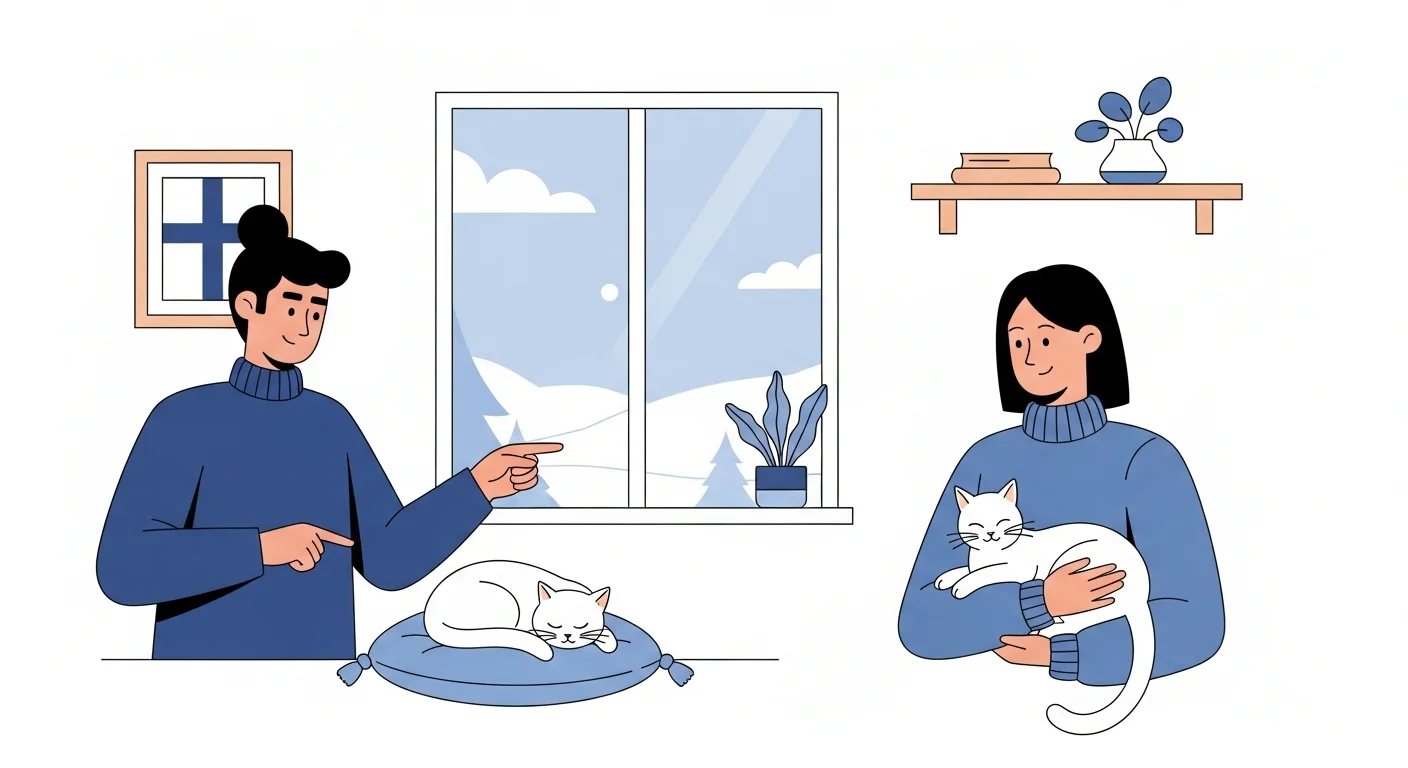
Diving Deeper: When to Choose Your Case
The choice between nominative, partitive, and genitive for objects depends on several factors: the verb, the completeness of the action, and whether the object is countable or uncountable.
Object of the Verb
-
Partitive for Indefinite Objects, Uncountable Nouns, or Ongoing Actions:
- If you're talking about an unspecified amount of something (e.g., milk, water), or if the action is ongoing and not yet completed, the object takes the partitive case.
- Juon maitoa. — I drink (some) milk.
- Rakastan sinua. — I love you. (Many verbs that express feelings or emotions take the partitive).
-
Genitive (or Nominative for specific subjects) for Definite Objects or Completed Actions:
- If the action is completed and affects the entire object, or if the object is specific and definite, it typically takes the genitive case (for singular objects).
- Ostin talon. — I bought the house. (The act of buying is complete, and it's a specific house).
Key Phrases / Hyödyllisiä ilmauksia
Here are some phrases demonstrating these case uses:
- Minulla on koira. — I have a dog. (Indefinite object, partitive case for koira from koiraa)
- Näen koiran. — I see the dog. (Definite object, genitive case for koira from koiran)
- Tykkään kahvista. — I like (some) coffee. (Verb tykätä takes the partitive)
- Syön leivän. — I eat the bread (the whole loaf/piece). (Definite object, completed action, genitive)
- Syön leipää. — I eat (some) bread. (Indefinite quantity, ongoing action, partitive)
- Luetko kirjaa? — Are you reading a book? (Ongoing action, indefinite book, partitive)
- Luen kirjan. — I will read/read the book. (Completed action, definite book, genitive)
Vocabulary / Sanasto
| Finnish | English | Example |
|---|---|---|
| kissa | cat | Minulla on kissa. (I have a cat.) |
| koira | dog | Näen koiran. (I see the dog.) |
| talo | house | Talo on vanha. (The house is old.) |
| kirja | book | Luet kirjaa. (You are reading a book.) |
| vesi | water | Juon vettä. (I drink water.) |
| maito | milk | Hän ostaa maitoa. (She buys milk.) |
| omena | apple | Syön omenan. (I eat the apple.) |
| ystävä | friend | Hänellä on ystävä. (He has a friend.) |
| ruoka | food | Teen ruokaa. (I'm making food.) |
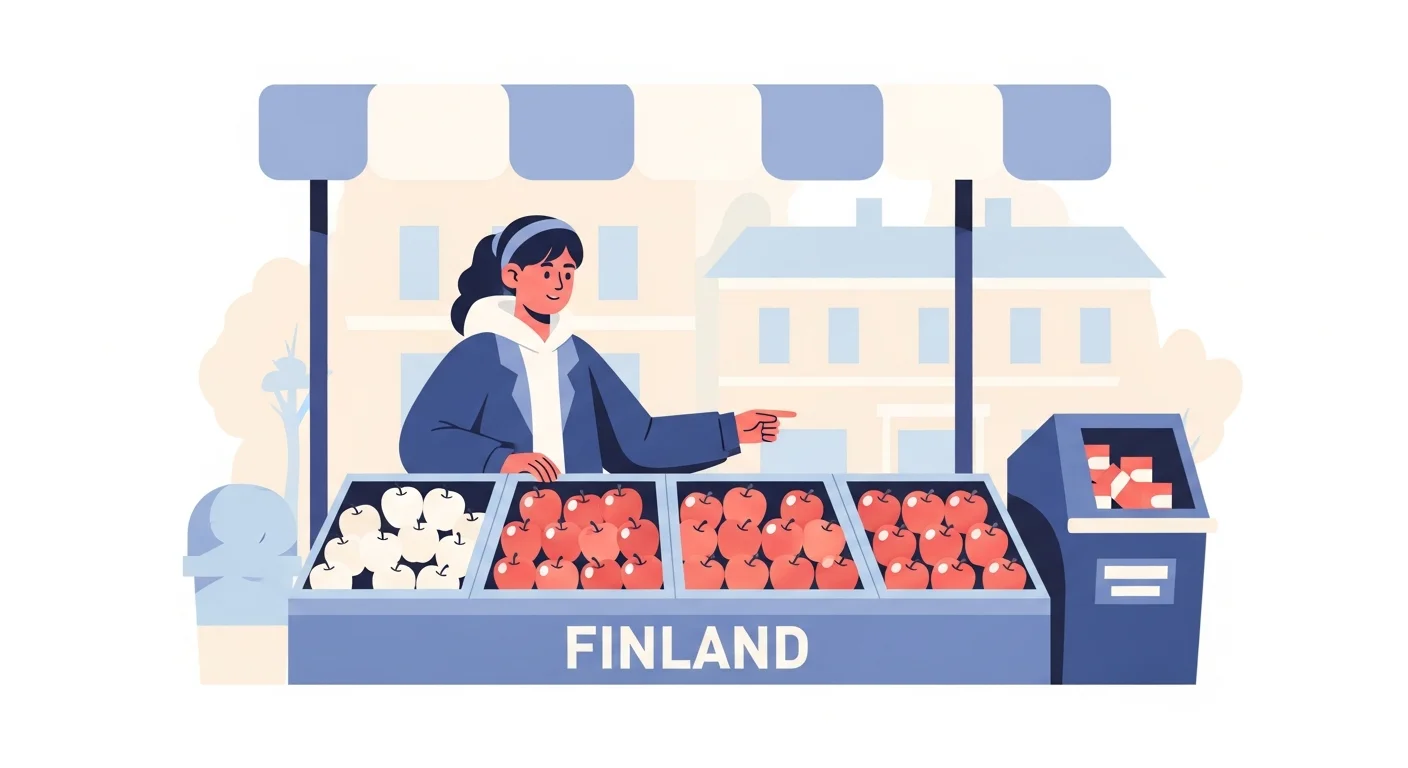
🇫🇮 Cultural Context / Kulttuuritausta
The Finnish case system might seem complex with its 15 different cases, but it's a fundamental part of what makes Finnish unique and allows for incredibly flexible word order. Without articles, these case endings become even more critical for conveying meaning and nuance. Think of them as the Swiss Army knife of grammar!
Finns generally appreciate when foreigners make an effort to speak their language, even if you make mistakes. Don't be afraid to try out these noun cases in real conversations. Even small attempts like asking for "kahvia" (some coffee) instead of just "kahvi" (coffee in nominative, often implying a definite whole cup) will show your dedication and deepen your connection with the culture. Finland also has two official languages, Finnish and Swedish, and while Swedish is also spoken, Finnish remains the primary language for the vast majority.
Quick Practice / Harjoitus
Choose the correct form of the noun in parentheses (nominative, partitive, or genitive):
- Minä juon ________ (olut). (I drink beer.)
- Näen ________ (linnu) puussa. (I see a bird in the tree.)
- Ostin ________ (auto). (I bought the car.)
(Answers: 1. olutta, 2. linnun, 3. auton)
Conclusion
Mastering how Finnish expresses definiteness and indefiniteness without articles is a significant step in your language learning journey. By understanding the core functions of the nominative, partitive, and genitive cases, you unlock a powerful tool for clear and natural communication. Keep practicing, pay attention to the context, and soon you'll be navigating Finnish nouns with confidence, whether you're talking about a cat or the cat!
References
- Uusi kielemme
- Venla.info - Nominative, genitive, partitive
- Pronuncia - Understanding Finnish Nouns and Cases for English Learners
- Finnish Language and Culture Resources - University of Helsinki
Related Topics
- Finnish Case System: An Overview
- Verbs that Take the Partitive Case
- Finnish Pronunciation Guide for Beginners
- Basic Finnish Sentence Structure
Ready to start learning?