Building Blocks of Finnish: Unlocking Compound Nouns
Building Blocks of Finnish: Unlocking the Power of Compound Nouns
Ever tried to learn a new language and felt like you were just memorizing individual words? What if you could unlock a secret power that lets you understand entire concepts by simply combining two or more familiar words? Welcome to the fascinating world of Finnish compound nouns, the Building Blocks of Finnish: Unlocking the Power of Compound Nouns. These linguistic marvels offer more than just grammatical insight; they provide a unique window into Finnish culture, history, and the very way Finns perceive the world around them. Get ready to dive deep into a language where words are like LEGO bricks, fitting together seamlessly to create new meanings and reveal profound cultural nuances.
A Tapestry Woven with Words: Nature and Everyday Life
Finnish, with its agglutinative nature, is a master of creating incredibly descriptive and precise compound nouns. Unlike many languages that might use prepositions or multiple words to express a complex idea, Finnish often stitches words together into a single, often poetic, entity. This isn't just a linguistic quirk; it's a reflection of how Finns view their surroundings and daily experiences. Take, for example, the deep connection Finns have with nature. Many compound nouns vividly paint pictures of the Finnish landscape and its inhabitants.
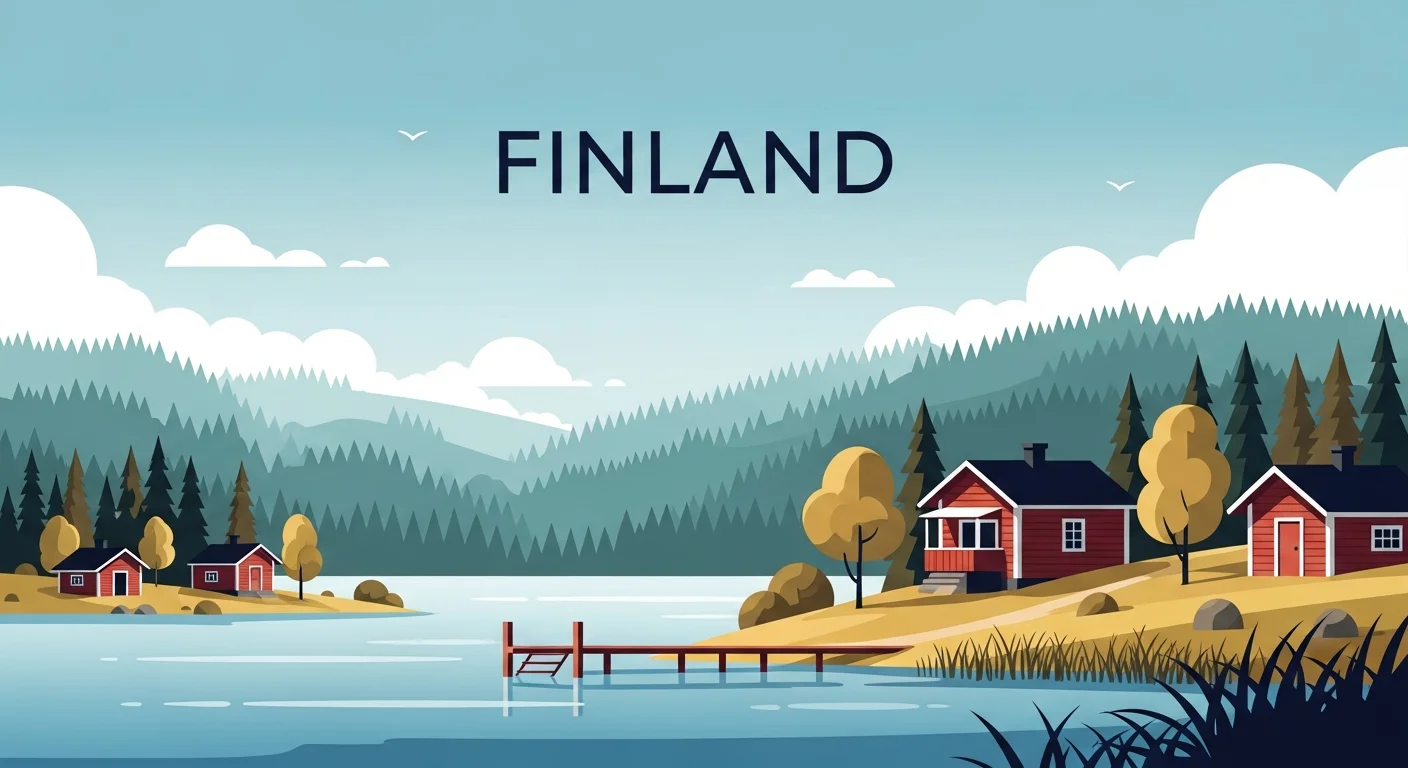
Consider words like järvimaisema (lake landscape), a straightforward combination of järvi (lake) and maisema (landscape). This simple compound immediately evokes the serene beauty of Finland's thousand lakes, a cornerstone of the national identity. Or how about metsäpolku (forest path), joining metsä (forest) and polku (path)? It’s not just any path; it’s a path through the vital, sprawling Finnish forests, central to recreation, foraging, and cultural heritage. These compounds don't just name things; they encapsulate entire scenes and experiences, making the language incredibly efficient and evocative. This ability to pack so much meaning into a single word highlights a culture that values directness and a close relationship with its natural environment.

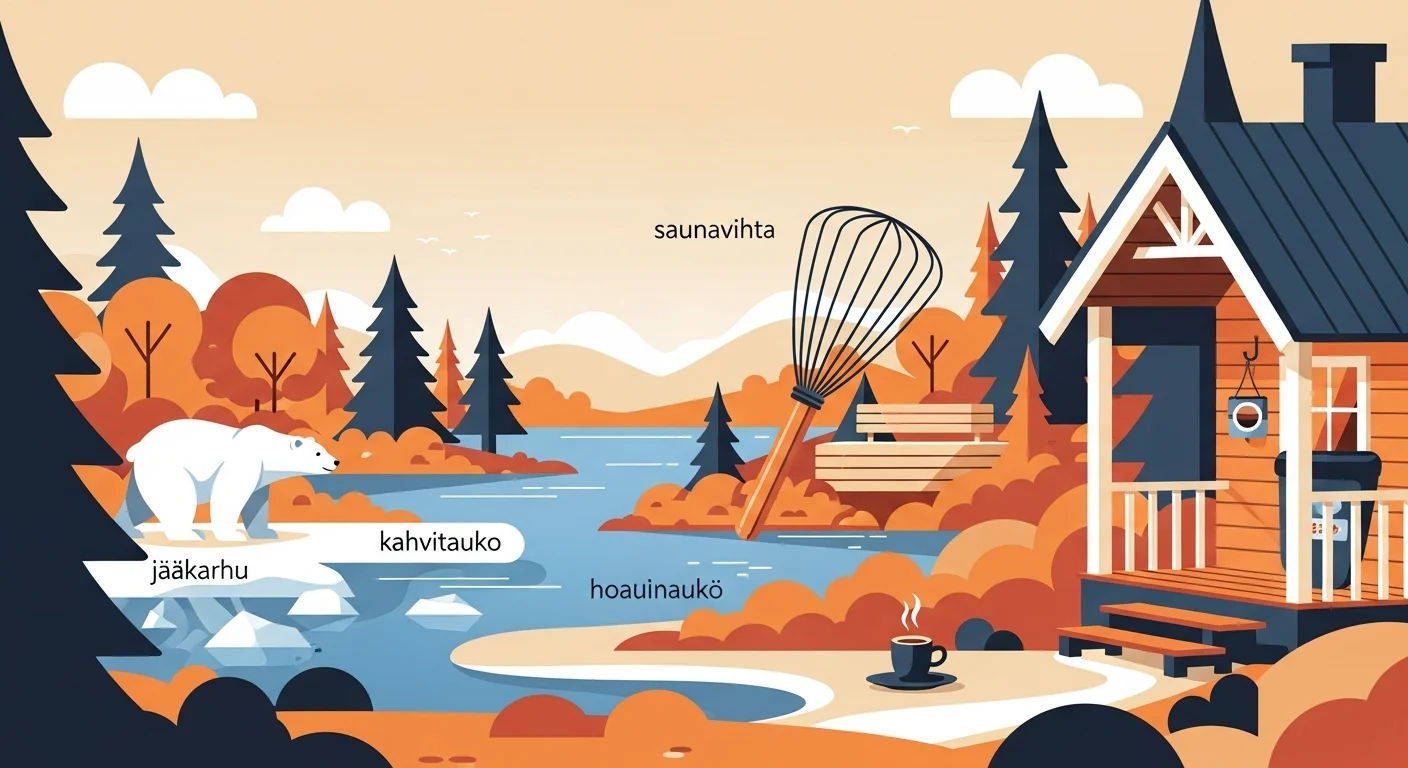
Beyond nature, compound nouns illuminate the rhythm of Finnish daily life and traditions. Kahvitauko (coffee break) is a perfect example, combining kahvi (coffee) and tauko (break). Coffee culture is incredibly strong in Finland, with Finns ranking among the world's highest coffee consumers. This compound noun isn't just about stopping for a drink; it's a social ritual, a pause in the day for connection and warmth, ingrained in the fabric of Finnish working and social life. Similarly, saunavihta (sauna whisk), from sauna and vihta (whisk/birch whisk), immediately transports you to the heart of the Finnish sauna experience. The vihta, often made from birch branches, is an essential tool for stimulating circulation and releasing the fragrant oils of the leaves, enhancing the sauna ritual that is so vital to Finnish well-being and identity.
Unpacking Concepts: From Practicality to Philosophy
The power of Finnish compound nouns extends to more abstract concepts, revealing a practical and often logical approach to describing the world. Consider tietokone (computer), literally meaning "data machine" (tieto - data/information, kone - machine). This compound clearly describes the computer's function, contrasting with borrowed words in many other languages. Another insightful example is jääkaappi (refrigerator), which translates to "ice cupboard" (jää - ice, kaappi - cupboard). This word harks back to a time before electric refrigeration, when ice was used to keep food cool, offering a historical linguistic snapshot.
These examples illustrate the Finnish tendency to create new words by combining existing ones that logically describe the new concept. This isn't merely about word-formation; it speaks to a pragmatic and self-sufficient cultural trait, preferring to build from within the language rather than always adopting foreign terms. This deep-seated linguistic creativity and logical construction make Finnish a fascinating language to learn, as understanding the components of a compound noun often unlocks its meaning intuitively. It’s like being given a set of building blocks and discovering you can construct almost anything.
🇫🇮 Language Corner / Kielinurkka
The secret to mastering Finnish compound nouns lies in recognizing their component parts. Often, the first word acts as an adjective or specifies the second word, which is the main noun. There are no spaces between the words, and sometimes vowel harmony or consonant gradation rules apply at the "seam" of the words, though the basic form usually remains clear for learners. This is where the Building Blocks of Finnish: Unlocking the Power of Compound Nouns really shines as a language learning strategy.
Useful Phrases
Here are some phrases featuring compound nouns that are useful for understanding Finnish culture:
- Mennäänkö kahvitauolle? - Shall we go for a coffee break?
- Rakastan mökki-elämää. - I love cottage life. (mökki - cottage, elämä - life)
- Onko sinulla saunavihta? - Do you have a sauna whisk?
- Näetkö jääkarhun? - Do you see the polar bear? (jää - ice, karhu - bear)
- Ostan uuden tietokoneen. - I will buy a new computer.
Vocabulary / Sanasto
This small table introduces some relevant compound nouns and their component parts.
| Finnish | English | Example |
|---|---|---|
| saunavihta | sauna whisk | Saunavihta tuoksuu koivulta. (The sauna whisk smells like birch.) |
| järvimaisema | lake landscape | Suomen järvimaisemat ovat kauniita. (Finnish lake landscapes are beautiful.) |
| kahvitauko | coffee break | Pidämme kahvitauon joka päivä. (We have a coffee break every day.) |
| mökki-elämä | cottage life | Mökki-elämä on rentouttavaa. (Cottage life is relaxing.) |
| tietokone | computer | Tarvitsen uuden tietokoneen työhön. (I need a new computer for work.) |
| jääkaappi | refrigerator | Maito on jääkaapissa. (The milk is in the refrigerator.) |
| aurinkolasit | sunglasses | Unohdin aurinkolasit kotiin. (I forgot my sunglasses at home.) |
| lukutoukka | bookworm | Hän on todellinen lukutoukka. (He/She is a real bookworm.) |
Cultural Insight
Did you know that many Finnish surnames are also compound nouns, often reflecting nature or a past profession? For example, "Virtanen" comes from virta (stream/current) and -nen (a diminutive suffix, common in surnames), meaning "little stream." This deep integration of compound words into personal identity further emphasizes their significance in Finnish culture and language. This is a testament to the organic growth and historical depth of Finnish vocabulary.
Conclusion
Understanding Finnish compound nouns is not just a grammatical exercise; it’s a journey into the heart of Finnish culture. These powerful linguistic Building Blocks of Finnish: Unlocking the Power of Compound Nouns provide a lens through which to appreciate the Finnish connection to nature, their cherished traditions, and their pragmatic approach to life. As you continue your language learning adventure, pay attention to these fascinating word combinations. Each one is a mini-story, a cultural insight, and a testament to the elegant efficiency of the Finnish language. So, next time you encounter a long Finnish word, don't be intimidated – try to break it down, and you might just unlock a deeper understanding of Finland itself! Onnea matkaan! (Good luck on your journey!)
References
- 1. Finnish coffee culture - Wikipedia
- 2. The Finnish sauna - Visit Finland
- 3. Finnish surnames - Wikipedia
Related Topics
Finnish Grammar, Finnish Vocabulary, Language Learning Tips, Finnish Traditions, Nature in Finland, A1 Finnish, A2 Finnish, Cultural Linguistics
Ready to start learning?