
Numbers Beyond Counting: Finnish in Everyday Life
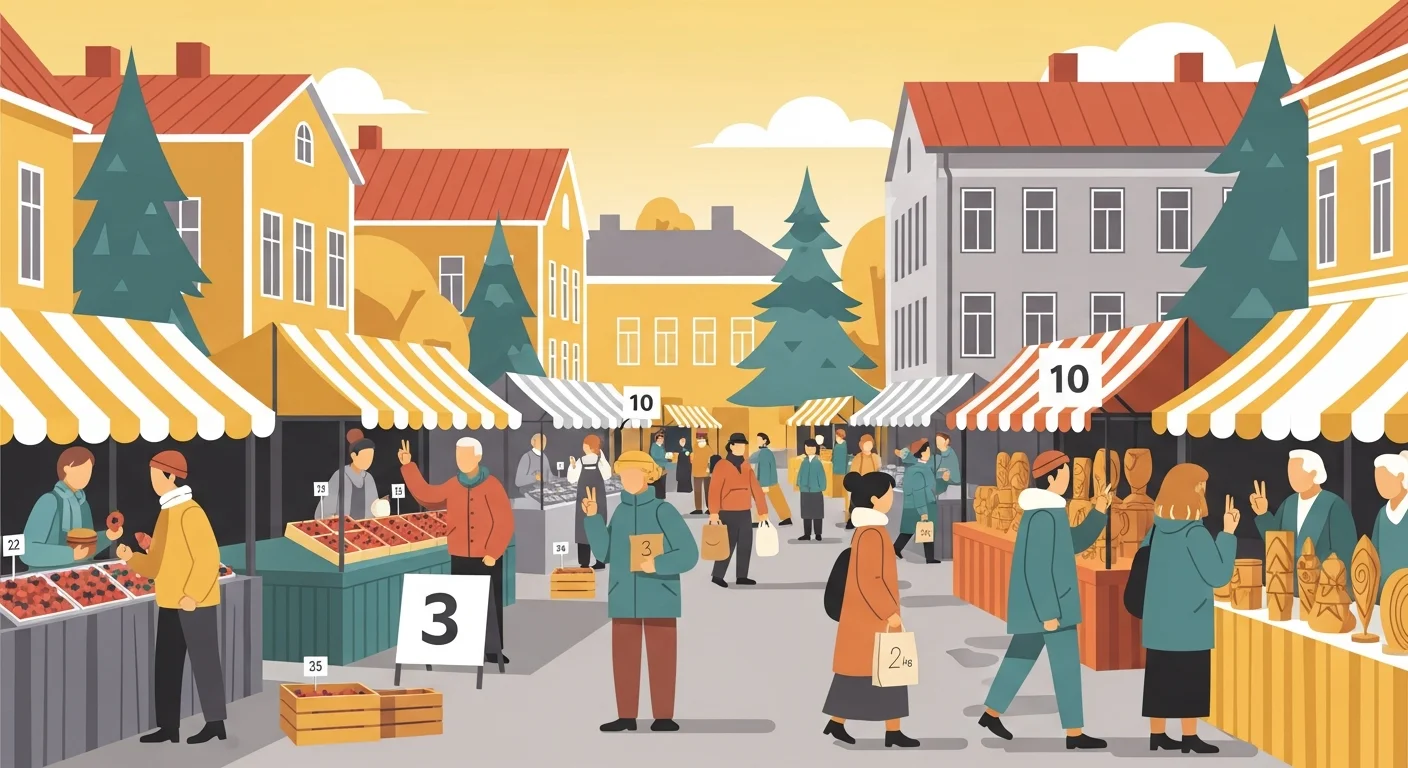
Numbers Beyond Counting: Using Finnish Numbers in Everyday Situations
[Engaging Hook: Why this lesson matters for Finnish learners]
Learning to count in Finnish is a great first step, but what about using those numbers in real, everyday situations? This lesson, Numbers Beyond Counting: Using Finnish Numbers in Everyday Situations, will help you move past simple counting and start using Finnish numbers confidently in shops, restaurants, and more. We'll cover practical phrases and cultural insights so you can truly immerse yourself in the Finnish language and culture!
Core Lesson Section 1
[Primary teaching content (~30%): Introduce the main concept clearly. Explain the grammar pattern, vocabulary theme, or pronunciation rule. Use simple examples with Finnish + English side by side. Share memory tricks, patterns, or beginner-friendly explanations.]
In this section, we'll focus on using numbers when talking about quantities and prices. Finnish, like English, uses numbers to describe how much of something you want. However, the grammatical structure can be a little different. The key is to remember that the noun describing the quantity often appears in the partitive case when used with numbers greater than one. Don't worry too much about the technicalities of the partitive just yet (that's for another lesson!), but focus on recognizing its form.
Let's start with some simple examples:
- Yksi kahvi — One coffee (The word kahvi is in its basic form)
- Kaksi kahvia — Two coffees (The word kahvi changes to kahvia due to the quantity being more than one and it taking the partitive form.)
- Kolme omenaa — Three apples (Similarly, omena becomes omenaa)
When talking about prices, the structure is fairly straightforward:
- Se maksaa viisi euroa – It costs five euros.
- Se maksaa kymmenen senttiä – It costs ten cents.
Notice that the word euroa (euros) and senttiä (cents) also appear in the partitive when more than one. Remember, practice makes perfect!
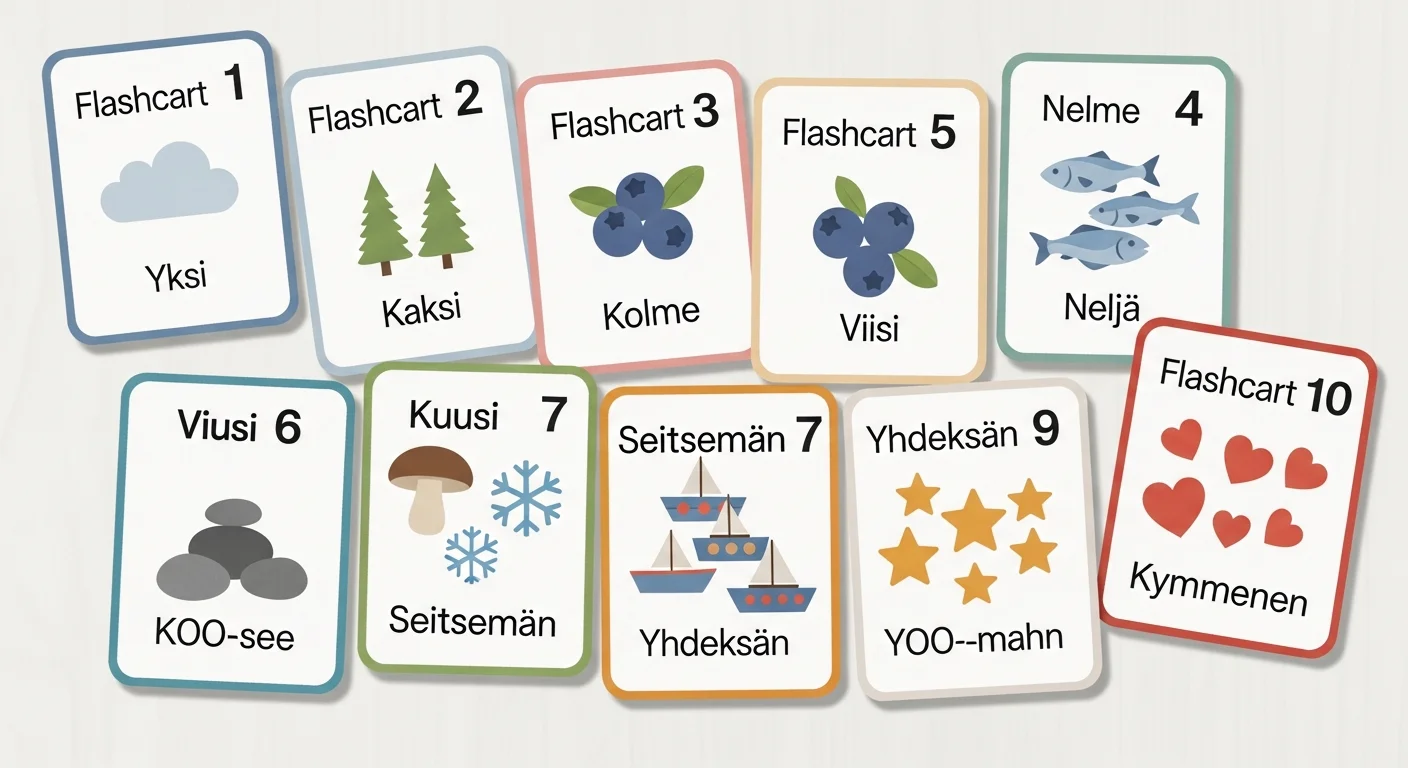
Core Lesson Section 2
[Continue the lesson (~30%): Go deeper with more examples, exceptions, or practice. Include example dialogues, fill-in exercises, or comparison tables. Keep it practical – focus on phrases people will actually use.]
Now let's look at some more complex scenarios and common phrases you might encounter:
At the Market:
Imagine you're at a Finnish market buying fresh berries. Here's a possible exchange:
- You: Paljonko maksaa kilo mansikoita? – How much does a kilo of strawberries cost?
- Vendor: Viisi euroa. – Five euros.
- You: Minä otan kaksi kiloa. – I'll take two kilos.
In a Restaurant:
Ordering food and drinks requires knowing numbers:
- Waiter: Mitä saisi olla? – What can I get you?
- You: Yhden kahvin ja kaksi pullaa, kiitos. – One coffee and two buns, please.
Giving your phone number:
When giving your phone number, you simply say the numbers one by one. For example, if your number is 040-1234567, you would say:
- Nolla neljä nolla – yksi kaksi kolme neljä viisi kuusi seitsemän.
It's also common to group the numbers into pairs or triplets for easier understanding.
Key Phrases / Hyödyllisiä ilmauksia
- Paljonko maksaa? — How much does it cost?
- Minä haluan yhden… — I want one…
- Minä otan kaksi… — I'll take two…
- Kiitos, se riittää. — Thank you, that's enough.
- Anteeksi, onko teillä…? — Excuse me, do you have…?
- Se tekee yhteensä… — That makes a total of…
- Puhelinnumeroni on… - My phone number is...
Vocabulary / Sanasto
| Finnish | English | Example |
|---|---|---|
| Hinta | Price | Mikä on hinta? (What is the price?) |
| Euro | Euro | Se maksaa kaksi euroa. (It costs two euros.) |
| Sentti | Cent | Viisikymmentä senttiä. (Fifty cents.) |
| Kilo | Kilogram | Kilo omenoita. (A kilo of apples.) |
| Litra | Liter | Litra maitoa. (A liter of milk.) |
| Puoli | Half | Puoli litraa mehua. (Half a liter of juice.) |
| Määrä | Quantity | Mikä on määrä? (What is the quantity?) |
| Yhteensä | Total | Se tekee yhteensä 10 euroa. (That makes a total of 10 euros.) |
🇫🇮 Cultural Context / Kulttuuritausta
[Cultural background (~25%): Connect the language lesson to real Finnish life. Explain when/where Finns use these words, cultural nuances, or fun facts. Help learners understand the "why" behind the language.]
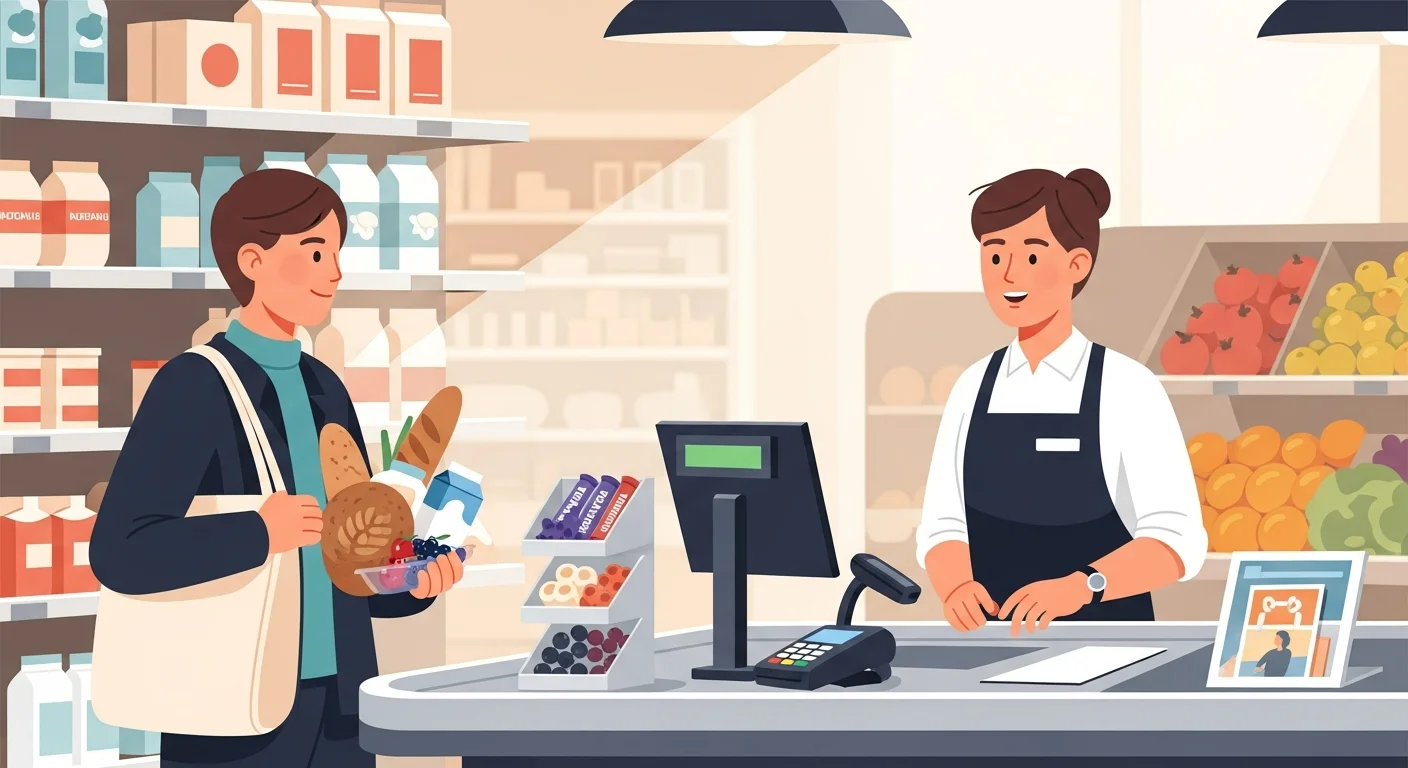
Finns are generally very precise, especially when it comes to money. You'll often hear them stating exact amounts, down to the cent. When shopping, it's polite to know basic number phrases. Directness is valued, so asking "Paljonko maksaa?" (How much does it cost?) is perfectly acceptable and common. Don't be afraid to use your Finnish numbers, even if you make mistakes! Finns appreciate the effort. You can also visit the YLE website to get familiar with the Finnish culture.
One cultural nuance to be aware of is the concept of tasaraha (exact change). While not always expected, having exact change or small bills is appreciated, especially in smaller shops or at market stalls. It speeds up the transaction and shows respect for the vendor's time. Also, it's good to know how the Finnish education system works.
Quick Practice / Harjoitus
[Mini exercise (~15%): 2-3 quick practice questions or scenarios where the reader can test what they learned.]
- You want to buy three tickets that cost 7 euros each. How much will it cost in total? (Answer in Finnish: Se maksaa yhteensä kaksikymmentäyksi euroa.)
- You're ordering at a cafe. Ask for two korvapuusti (cinnamon buns) and one latte. (Answer in Finnish: Minä haluan kaksi korvapuustia ja yhden latten, kiitos.)
- Give the following phone number in Finnish: 050-9876543 (Answer in Finnish: Nolla viisi nolla – yhdeksän kahdeksan seitsemän kuusi viisi neljä kolme.)
Conclusion
[Encourage continued learning, suggest next steps]
Congratulations! You've taken the first steps towards using Numbers Beyond Counting: Using Finnish Numbers in Everyday Situations. By practicing these phrases and understanding the cultural context, you'll be well on your way to confidently navigating everyday situations in Finnish. Keep practicing, and don't be afraid to make mistakes – that's how we learn! Next, try learning about telling time in Finnish or practicing more complex scenarios like ordering food with special requests. You can continue learning Finnish on the Visit Finland website.
References
Ready to start learning?