"Kyllä" vs. "Joo": Mastering "Yes" in Finnish Culture

"Kyllä" vs. "Joo": Mastering "Yes" in Finnish
Navigating the Finnish language can feel like traversing a vast, beautiful forest. Even simple words like "yes" have their own special nuances. While both "kyllä" and "joo" translate to "yes," understanding when to use each one is key to truly mastering "Yes" in Finnish and integrating into Finnish culture. This isn't just about language; it's about understanding the subtle social cues that make Finland so unique.
Understanding Finnish Formality
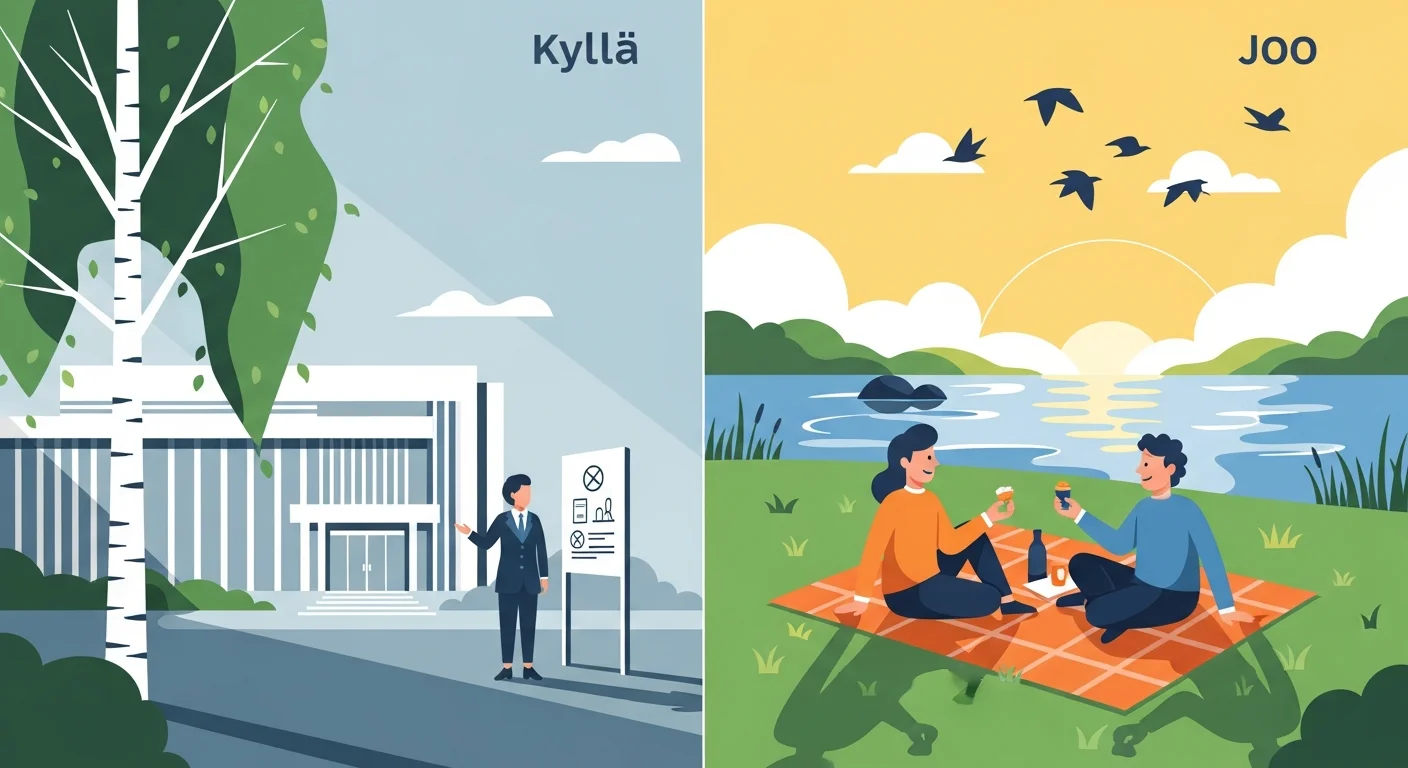
Finnish culture values directness and honesty, but also respects formality, particularly in certain situations. This respect for formality is reflected in the language itself. "Kyllä" is generally considered the more formal and polite way to say "yes." It's the "yes" you'd use when speaking to someone older than you, someone in a position of authority, or in a formal setting like a business meeting. Think of it as the equivalent of "yes, sir" or "yes, madam" in English, but without the overt deference.
"Joo", on the other hand, is the more casual and common way to say "yes." It’s perfectly acceptable to use with friends, family, and people you know well. Using "kyllä" in these situations might even sound a bit stiff or overly formal. Using "joo" demonstrates a certain level of familiarity and comfort.

Social Context and Usage
The choice between "kyllä" and "joo" depends heavily on the social context. Imagine you are at a formal dinner party at the President's house. In that case, if someone asks you a question, you would respond with "kyllä". On the other hand, if you are chatting with a friend at a kahvila (cafe) about whether you want another pulla (sweet bread), "joo" is the way to go.
Another interesting point is that the intonation can also subtly change the meaning. A drawn-out "jooo" can express agreement, acknowledgment, or even a slightly sarcastic "yeah, right." A sharp, clipped "kyllä" can emphasize agreement or confirmation. Paying attention to these nuances will elevate your Finnish language skills and allow you to communicate more effectively.
🇫🇮 Language Corner / Kielinurkka
Understanding the difference between "kyllä" and "joo" is just the beginning. Let's delve deeper into some useful phrases and vocabulary to help you navigate everyday conversations in Finnish. Remember to practice your pronunciation!
Useful Phrases
- Kyllä, kiitos - Yes, thank you (formal)
- Joo, kiitos - Yes, thank you (informal)
- Oletko valmis? Kyllä olen. - Are you ready? Yes, I am. (formal)
- Haluatko kahvia? Joo, kiitos. - Do you want coffee? Yes, please. (informal)
- Onko kaikki hyvin? Kyllä, kaikki on hyvin. - Is everything alright? Yes, everything is alright. (formal)
Vocabulary / Sanasto
| Finnish | English | Example |
|---|---|---|
| Kyllä | Yes (formal) | Kyllä, minä tulen. (Yes, I am coming.) |
| Joo | Yes (informal) | Joo, se on hyvä. (Yes, that is good.) |
| Kiitos | Thank you | Kyllä, kiitos paljon. (Yes, thank you very much.) |
| Anteeksi | Excuse me/Sorry | Anteeksi, puhutko englantia? (Excuse me, do you speak English?) |
| Ole hyvä | You're welcome | Kiitos! - Ole hyvä! (Thank you! - You're welcome!) |
| Hei | Hello | Hei kaikki! (Hello everyone!) |
| Näkemiin | Goodbye | Näkemiin ja hyvää päivää! (Goodbye and have a good day!) |
Cultural Insight
Did you know that Finns often use silence as a form of communication? It's not considered rude to pause before answering a question. In fact, it's often seen as a sign of thoughtfulness and respect. So, don't feel pressured to fill every silence with words – sometimes, the absence of "kyllä" or "joo" speaks volumes!
Conclusion
Mastering "Kyllä" vs. "Joo" is more than just learning vocabulary; it's about understanding the cultural nuances of Finland. By paying attention to the context and using the appropriate form of "yes," you'll be one step closer to feeling like a local. So, embrace the challenge, practice your Finnish, and perhaps plan a trip to experience the Finnish culture firsthand!
References
Ready to start learning?