
What Time Is It? Telling Time Like a Finn & Avoiding Mistakes
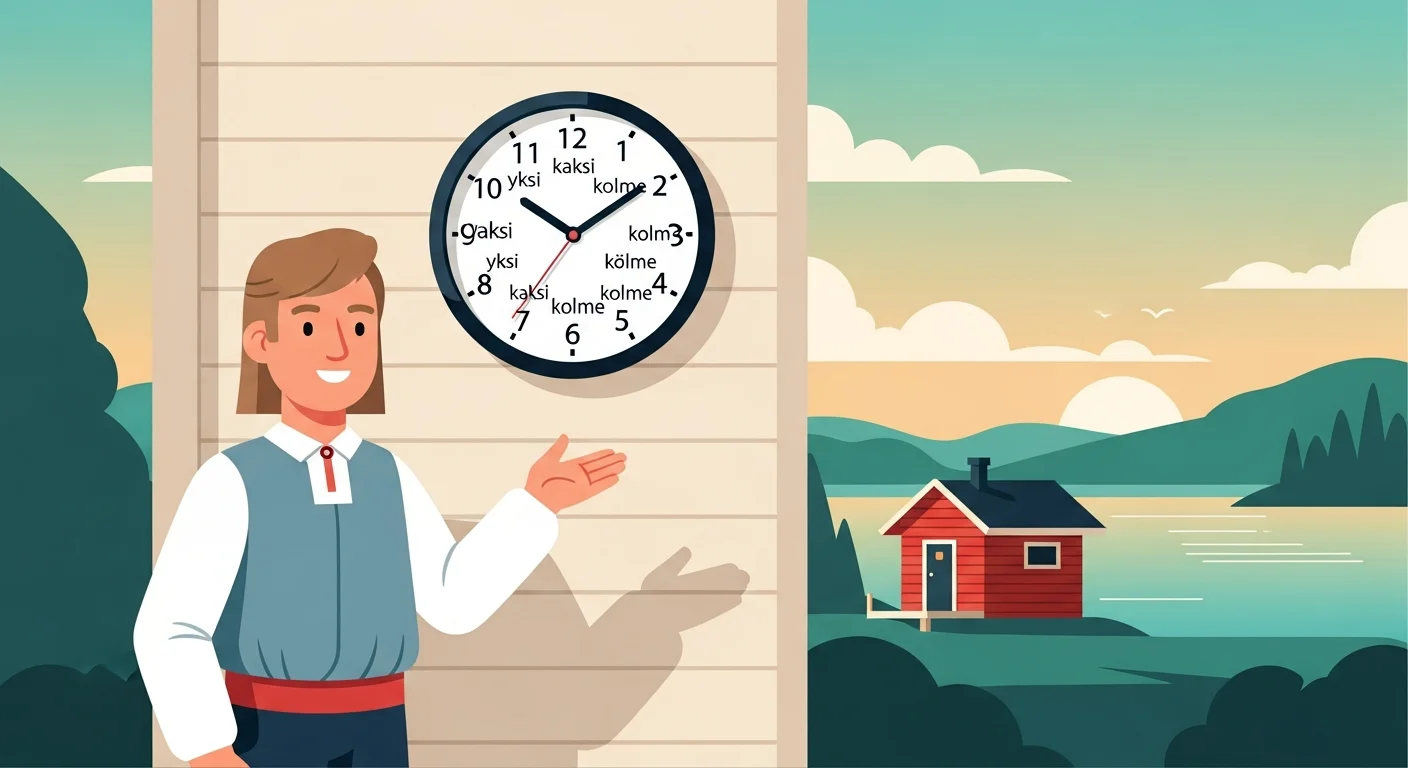
What Time Is It? Telling Time Like a Finn (and Avoiding Confusing Mistakes)
Learning to tell time is a fundamental skill in any language. But telling time in Finnish can be a little tricky! The Finnish language has its own unique way of expressing time, and if you're not careful, you can easily make some common mistakes. This lesson will give you the tools you need to confidently answer the question "What Time Is It? Telling Time Like a Finn (and Avoiding Confusing Mistakes)". We'll cover essential vocabulary, grammar, and cultural nuances so you can understand and express time accurately in Finnish.
Telling the Hour / Tunnit
Let's start with the basics: telling the hour. The key word here is "kello," which means "clock" or "time." To ask "What time is it?" you say:
- Paljonko kello on? — What time is it?
To state the hour, you'll use the word "on" (is) followed by the number representing the hour. For example:
- Kello on yksi. — It's one o'clock.
- Kello on kaksi. — It's two o'clock.
- Kello on kolme. — It's three o'clock.
Notice that the numbers remain in their basic form.
Minutes – The Tricky Part! / Minuutit – Hankala Osa!
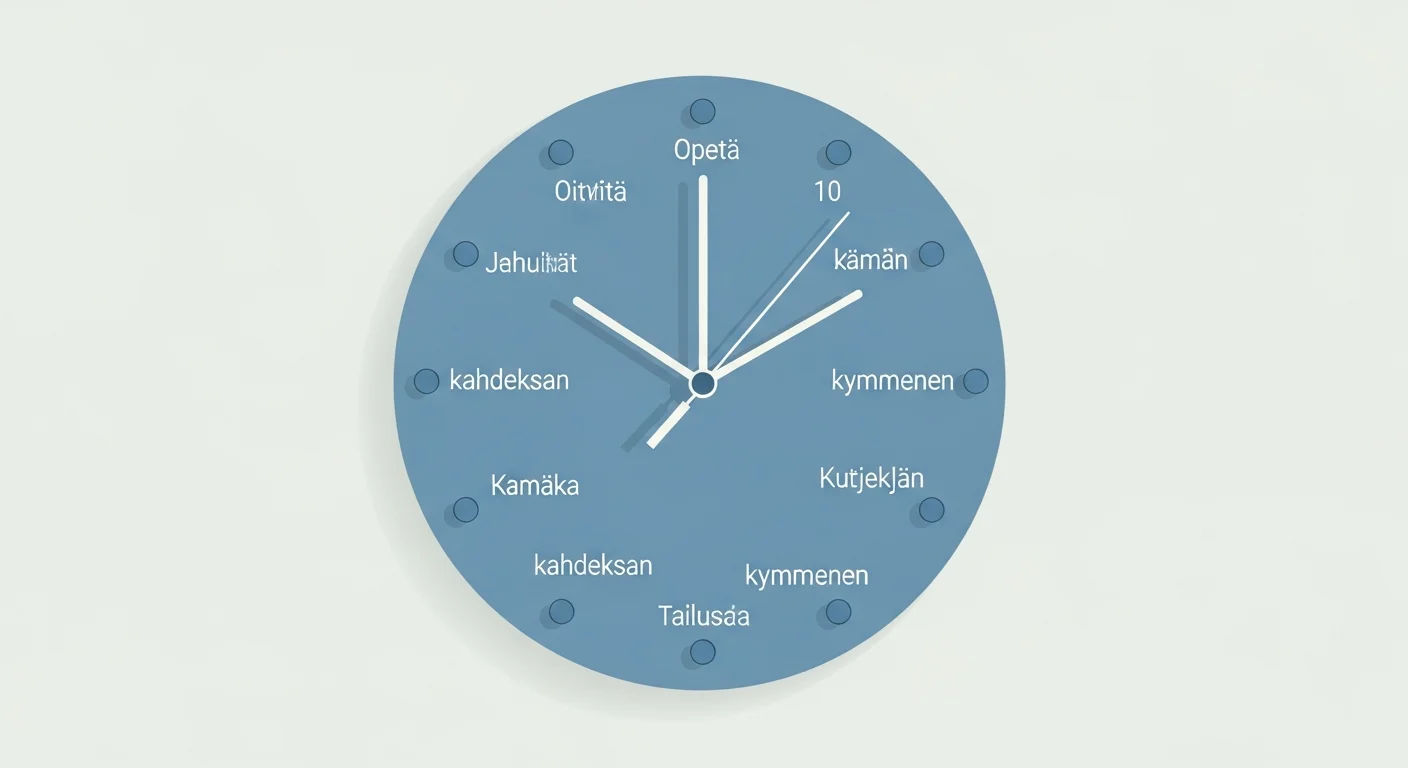
This is where things get a bit more complicated. In Finnish, you generally don't say "It's ten minutes past one" directly. Instead, you express minutes in relation to the half hour. You’ll be using the partitive case for minutes here, which adds another layer to the grammar. Don't worry, we'll break it down.
Instead of saying "1:10", you'd relate it to the half hour mark. Here's a table to help you understand:
| Time | Finnish Expression | Literal Translation | Explanation |
|---|---|---|---|
| 1:05 | viisi yli yksi | five past one | Five minutes after one o'clock. |
| 1:10 | kymmenen yli yksi | ten past one | Ten minutes after one o'clock. |
| 1:15 (quarter past) | vartti yli yksi | quarter past one | Fifteen minutes after one o'clock. Vartti is a common word for "quarter." |
| 1:20 | kaksikymmentä yli yksi | twenty past one | Twenty minutes after one o'clock. |
| 1:25 | viisi vaille puoli kaksi | five to half two | Five minutes before half past one (which would be closer to two). |
| 1:30 (half past) | puoli kaksi | half two | Literally, "half of two." Crucially, this means halfway to the next hour (two o'clock). This is a VERY common mistake for learners! |
| 1:35 | viisi yli puoli kaksi | five past half two | Five minutes after half past one (which is going towards two). |
| 1:40 | kaksikymmentä vaille kaksi | twenty to two | Twenty minutes before two o'clock. |
| 1:45 (quarter to) | vartti vaille kaksi | quarter to two | Fifteen minutes before two o'clock. |
| 1:50 | kymmenen vaille kaksi | ten to two | Ten minutes before two o'clock. |
| 1:55 | viisi vaille kaksi | five to two | Five minutes before two o'clock. |
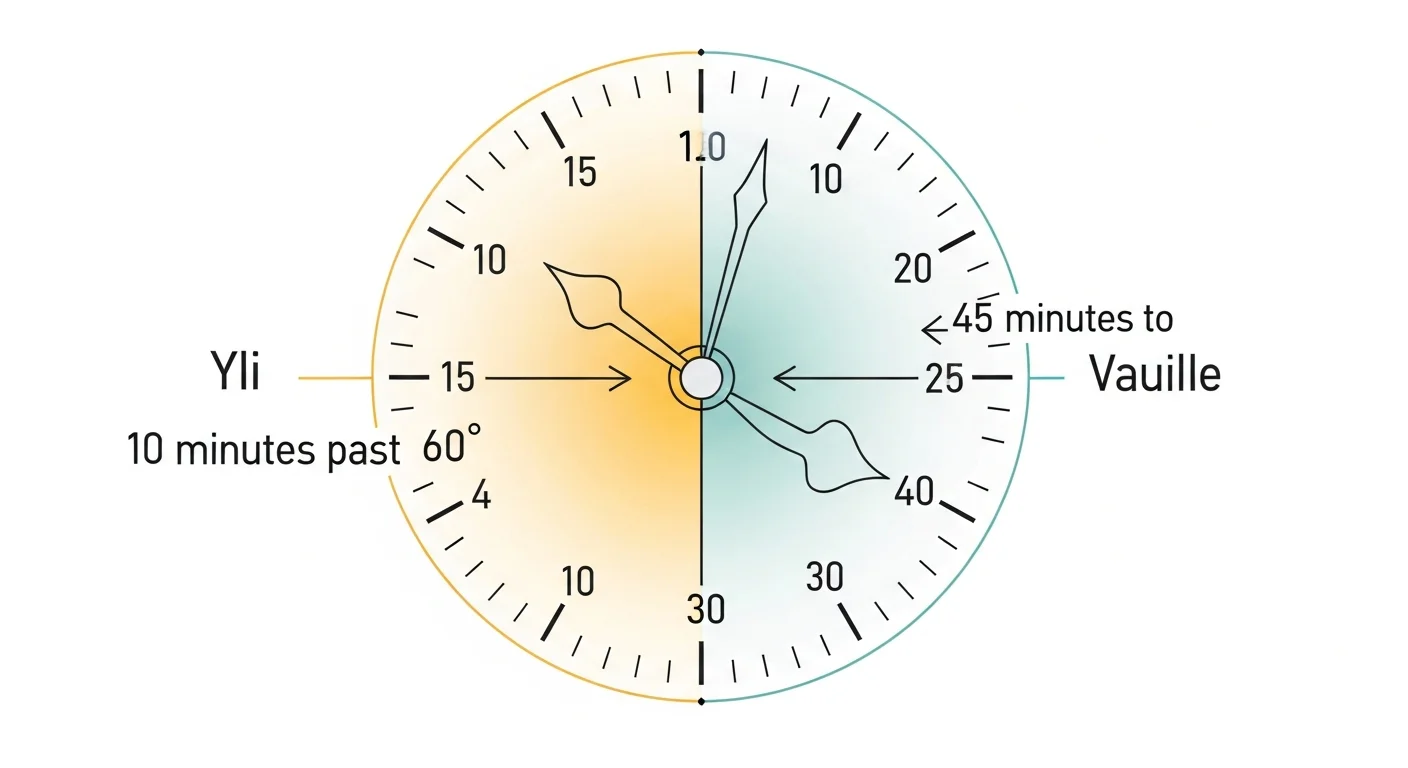
The key phrases to remember are "yli" (past/over) and "vaille" (to/before). The word "puoli" (half) always refers to the next hour. This is a critical distinction to understand!
Key Phrases / Hyödyllisiä ilmauksia
Here are some useful phrases to help you discuss time:
- Anteeksi, paljonko kello on? — Excuse me, what time is it?
- Kello on tasan yksi. — It's exactly one o'clock.
- Kello on noin viisi. — It's about five o'clock.
- Olen myöhässä! — I'm late!
- Olen ajoissa! — I'm on time!
- Mihin aikaan? — At what time?
Vocabulary / Sanasto
| Finnish | English | Example |
|---|---|---|
| kello | clock, time | Paljonko kello on? |
| tunti | hour | Yksi tunti - One hour |
| minuutti | minute | Viisi minuuttia - Five minutes |
| sekunti | second | Kolmekymmentä sekuntia - Thirty seconds |
| aamulla | in the morning | Kello on seitsemän aamulla. - It's 7 AM. |
| päivällä | in the day | Kello on kaksi päivällä. - It's 2 PM. |
| illalla | in the evening | Kello on yhdeksän illalla. - It's 9 PM. |
| yöllä | at night | Kello on kolme yöllä. - It's 3 AM. |
| puoli | half | Puoli kaksi - Half past one (1:30) |
| vartti | quarter | Vartti yli yksi - Quarter past one (1:15) |
🇫🇮 Cultural Context / Kulttuuritausta
Finns are generally punctual people. Being on time is considered a sign of respect. If you're meeting someone, it's best to arrive on time, or even a few minutes early. However, don't be surprised if Finns use phrases like "noin" (approximately) when talking about time. This reflects a certain flexibility, acknowledging that things don't always go exactly as planned.
It's also important to note that the 24-hour clock is commonly used in Finland, especially in official contexts like transportation schedules and business meetings. So, instead of saying "Kello on kaksi päivällä" (It's 2 PM), you might hear "Kello on neljätoista" (It's fourteen).
Quick Practice / Harjoitus
- What time is it if someone says, "Kello on vartti vaille kolme"?
- How would you say "It's 6:30" in Finnish?
- You have a meeting at 10:15 AM. How would you tell a Finnish colleague the meeting time using Finnish phrases?
Conclusion
Mastering the art of telling time in Finnish takes practice, but it’s a worthwhile skill that will enhance your communication and cultural understanding. Remember the key concepts of "yli" and "vaille", and always think about the next hour when using "puoli." Now that you know "What Time Is It? Telling Time Like a Finn (and Avoiding Confusing Mistakes)", keep practicing and you'll be telling time like a native in no time!
To continue your Finnish language journey, explore other basic grammar topics like numbers and days of the week. Hyvää jatkoa! (Good luck!)
References
- YLE Uutiset
- Visit Finland
- Uusi Kielemme - Finnish Language Course
Ready to start learning?