
Pekoni ei ole Bacon! Finnish Loanwords & Tricky Translations
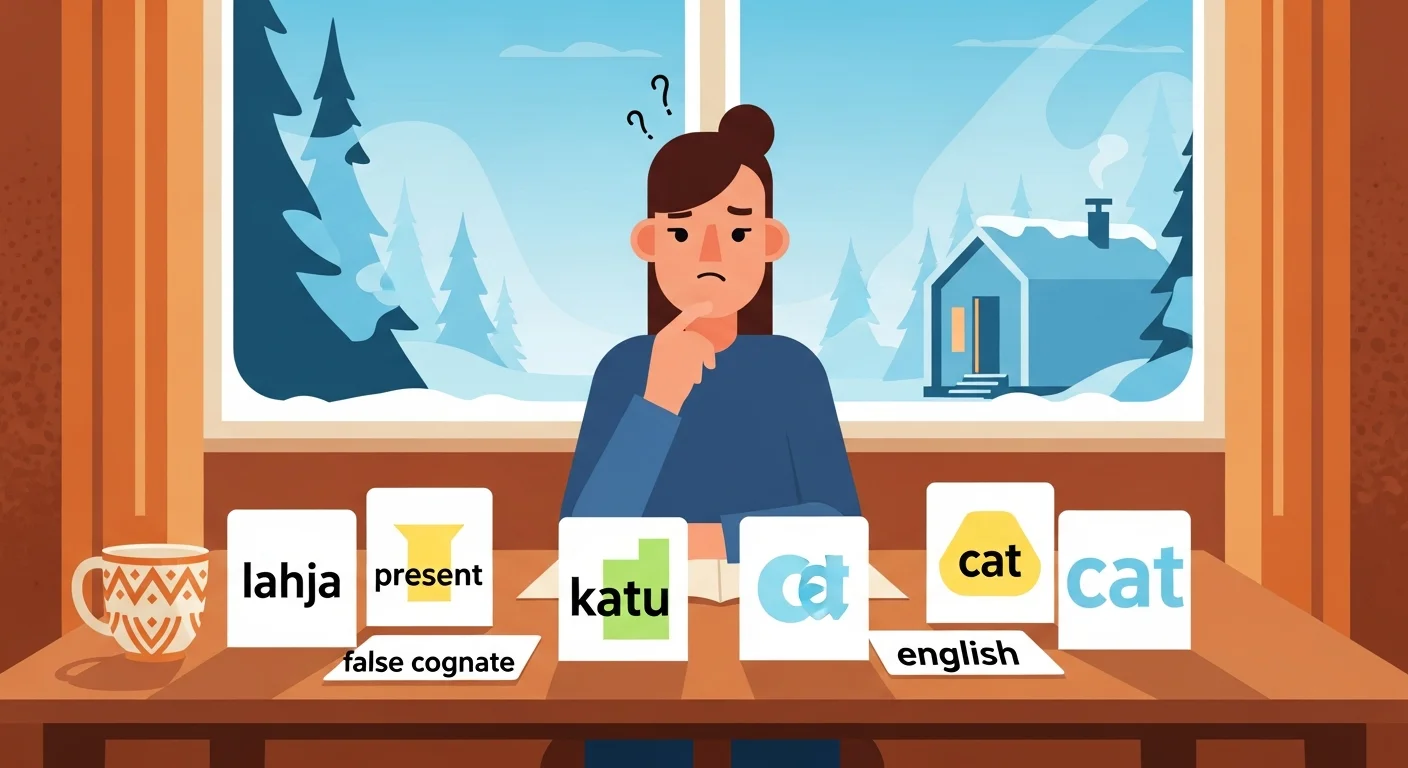
Pekoni ei ole Bacon! Finnish Loanwords: Tricky Translations and Pronunciation Pitfalls
Learning Finnish is an adventure, but sometimes it feels like navigating a minefield of similar-sounding words with completely different meanings! One of the trickiest areas for beginners is "Pekoni ei ole Bacon! Finnish Loanwords: Tricky Translations and Pronunciation Pitfalls." These words, borrowed from other languages (especially Swedish and English), can trip you up if you're not careful. This lesson will help you avoid common mistakes and master these tricky translations and pronunciation pitfalls.
Spotting the Imposters: Finnish Loanwords
Finnish has borrowed words from many languages over the centuries. While some have morphed beyond recognition, others still bear a resemblance to their origin, leading to confusion. It's crucial to remember that just because a word looks familiar doesn't mean it means the same thing. Let's look at some examples:
- Pekoni: Yes, it looks like "bacon," but it refers specifically to streaky bacon or American bacon. If you just want any kind of bacon in Finland, ask for porsaan kylkeä (pork belly).
- Appelsiini: This word looks and sounds a bit like "apple," but it actually means orange. Don’t go asking for an apple when you want an appelsiini!
- Tiktok: This one should seem obvious given how new TikTok is, but the pronunciation in Finnish is "Teek-Tok," with emphasis on both syllables.

Pronunciation Pitfalls: It's Not Always What It Seems
Even if you know the correct translation, Finnish pronunciation can throw you for a loop. Finnish follows strict pronunciation rules, so each letter is generally pronounced the same way every time. This can be different from English and other languages. This is crucial to remember when tackling "Pekoni ei ole Bacon! Finnish Loanwords: Tricky Translations and Pronunciation Pitfalls."
Consider these points:
- Double Vowels & Consonants: Double letters in Finnish drastically change the length of the sound. Tuli (fire) is very different from tuuli (wind)!
- Vowel Harmony: This means that certain vowels can't appear in the same word. This affects how some loanwords are integrated into Finnish. For instance, you won't find "ä," "ö," or "y" mixed with "a," "o," or "u" in the same native Finnish word. This can affect how some loanwords become naturalized in Finnish!
- The Letter "Y": Pronounced like the French "u" or German "ü." Not like the English "why"!
Key Phrases / Hyödyllisiä ilmauksia
Here are some useful phrases to help you navigate the world of Finnish loanwords:
- Anteeksi, luulin että... — Excuse me, I thought that...
- Mitä tarkoittaa...? — What does... mean?
- Onko tämä suomalainen sana? — Is this a Finnish word?
- Voitko toistaa, ole hyvä? — Can you repeat that, please?
- Olen vasta aloittelija. — I am only a beginner.
- Puhutko englantia? - Do you speak English? (Useful if you get totally stuck!)
Vocabulary / Sanasto
| Finnish | English | Example |
|---|---|---|
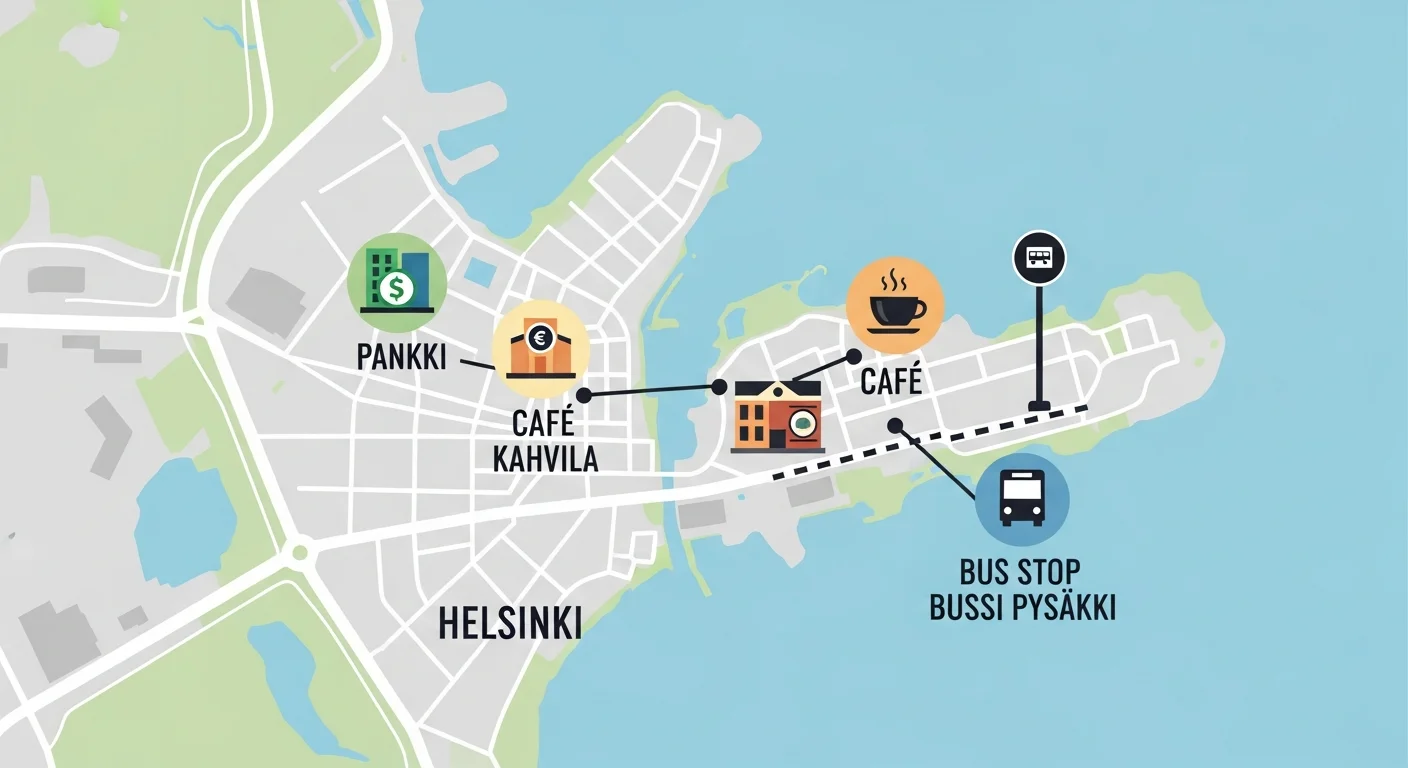
| bussi | bus | Odotan bussia. (I am waiting for the bus.) |
| hotelli | hotel | Me yövymme hotellissa. (We are staying at a hotel.) |
| pankki | bank | Minun täytyy mennä pankkiin. (I need to go to the bank.) |
| kahvi | coffee | Haluatko kupin kahvia? (Would you like a cup of coffee?) |
| tee | tea | Juon teetä aamuisin. (I drink tea in the mornings.) |
| suklaa | chocolate | Rakastan suklaata! (I love chocolate!) |
| tomaatti | tomato | Lisää tomaatti salaattiin. (Add tomato to the salad.) |
🇫🇮 Cultural Context / Kulttuuritausta
Finns are generally very understanding and patient with language learners. Don't be afraid to make mistakes! They appreciate the effort you're making to learn their language. Also, knowing about loanwords can give you insights into Finnish history and cultural influences. For example, the prevalence of Swedish loanwords reflects Finland's long history as part of Sweden. Recognizing that "Pekoni ei ole Bacon! Finnish Loanwords: Tricky Translations and Pronunciation Pitfalls," demonstrates a deeper understanding. Finns value directness. If you're unsure, just ask for clarification! They'd rather you ask than assume something incorrectly.
Knowing when it's appropriate to use loanwords is helpful. Some older Finns might prefer the original Finnish words if they exist. However, younger generations readily use loanwords, especially in urban areas. Using English loanwords is not unusual, but pronunciation can make things tricky. Don't be surprised if they ask you to repeat yourself.
Quick Practice / Harjoitus
- You want to order bacon at a restaurant in Finland. What should you ask for if you want streaky bacon? What if you just want any bacon?
- You hear someone say "bussi". Where are they likely going, and how is the word pronounced?
- A friend offers you an appelsiini. Should you expect an apple or an orange?
Conclusion
Mastering Finnish loanwords takes time and practice, but it's an essential step in your language learning journey. Remember that "Pekoni ei ole Bacon! Finnish Loanwords: Tricky Translations and Pronunciation Pitfalls," and don't be afraid to ask for clarification. Keep practicing, and soon you'll be navigating the Finnish language like a pro! Next, focus on understanding Finnish cases and how they affect word endings. Good luck, and tsemppiä! (Good luck!)
References
- YLE Uutiset (https://yle.fi/uutiset)
- Visit Finland (https://www.visitfinland.com/)
Ready to start learning?