
Isänpäivä ja Äitienpäivä: Finnish for Parents With Love
Isänpäivä ja Äitienpäivä: Talking About Parents With Love (And Finnish Cases!)
Want to express your love for your parents in Finnish? Understanding how to talk about family is a fantastic way to connect with Finnish culture and expand your language skills. This lesson will guide you through essential vocabulary and grammar for celebrating Isänpäivä (Father's Day) and Äitienpäivä (Mother's Day) while tackling some basic Finnish cases! Get ready to impress your äiti (mother) and isä (father) with your newfound Finnish skills!
Talking About Äiti and Isä: Nominative and Genitive Cases
In Finnish, nouns change form depending on their function in a sentence. These changes are called "cases." We'll start with two of the most common: the nominative and genitive cases. The nominative is the basic form of the noun (the one you find in the dictionary), while the genitive is often used to show possession or connection.
Let’s look at äiti (mother) and isä (father):
- Äiti (mother) - Nominative case
- Isä (father) - Nominative case
- Äidin (mother's) - Genitive case
- Isän (father's) - Genitive case
Notice how the endings change. This is crucial! Let's see them in action:
- Minun äitini on paras. – My mother is the best.
- Isän auto on punainen. – Father's car is red.
- Äidin rakkaus on suuri. - Mother's love is great.
- Isän neuvo on viisas. - Father's advice is wise.

More Cases and Family Connections
Now, let's expand our vocabulary and explore a few more useful cases: the partitive and the illative.
The partitive case is often used with uncountable nouns or when talking about some of something. It can also express an ongoing action. For äiti and isä, the partitive forms are äitiä and isää.
The illative case expresses movement into something. It's like saying "into mother" or "into father’s place/heart". The illative forms are äitiin and isään.
Here are some example sentences that use these cases:
- Rakastan äitiäni. – I love my mother (partitive, but here acts as accusative).
- Ostan isälle lahjan. – I'm buying a gift for father (allative, similar meaning to dative).
- Menen äitiin. – I'm going to mother/mother's place.
- Isään voi aina luottaa. - One can always trust father.
Key Phrases / Hyödyllisiä ilmauksia
Here are some phrases to use around Isänpäivä ja Äitienpäivä:
- Hyvää äitienpäivää! — Happy Mother's Day!
- Hyvää isänpäivää! — Happy Father's Day!
- Kiitos, äiti, kaikesta. — Thank you, Mom, for everything.
- Kiitos, isä, olet paras. — Thank you, Dad, you're the best.
- Olen ylpeä äidistäni. — I am proud of my mother.
- Olen ylpeä isästäni. — I am proud of my father.
- Rakastan sinua, äiti. — I love you, Mom.
- Rakastan sinua, isä. — I love you, Dad.
Vocabulary / Sanasto
| Finnish | English | Example |
|---|---|---|
| Äiti | Mother | Äiti on minulle tärkeä. |
| Isä | Father | Isä opetti minut ajamaan. |
| Vanhemmat | Parents | Vanhemmat rakastavat lapsiaan. |
| Lapsi | Child | Lapsi antoi äidille kukan. |
| Perhe | Family | Meillä on suuri perhe. |
| Rakkaus | Love | Perheen rakkaus on tärkeää. |
| Lahja | Gift | Sain lahjan äidiltä. |
| Juhla | Celebration | Äitienpäivä on tärkeä juhla. |
| Onnellinen | Happy | Olen onnellinen äitienpäivänä. |
| Ylpeä | Proud | Olen ylpeä isästäni. |
🇫🇮 Cultural Context / Kulttuuritausta
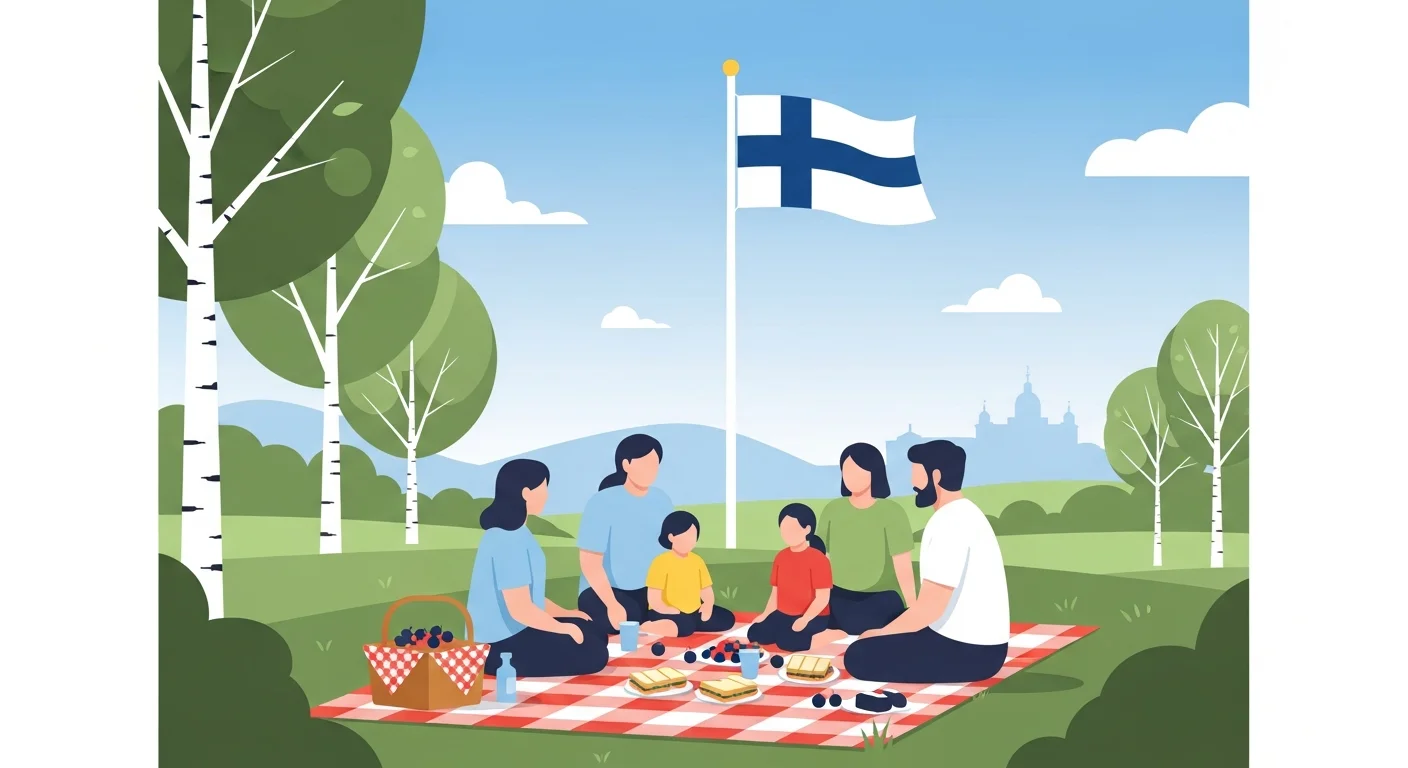
Isänpäivä is celebrated on the second Sunday of November in Finland. Äitienpäivä is celebrated on the second Sunday of May. Both days are official flag days, meaning that Finnish flags are flown across the country. It's a time for families to come together, often with children giving their parents handmade cards and small gifts. Breakfast in bed for äiti on Mother's Day is a common tradition! These days are more than just holidays; they are a heartfelt expression of gratitude and appreciation for the invaluable role parents play in Finnish society. Understanding the cultural significance behind these celebrations provides a deeper connection to the Finnish language and its people. You can find more information about Finnish culture on websites like Visit Finland.
Quick Practice / Harjoitus
- How would you say "Happy Father's Day" in Finnish?
- Translate: "My mother's cake is delicious."
- How do you say "I love my parents" in Finnish? (Hint: You might need to use a plural form!)
Conclusion
Congratulations! You've taken your first steps in expressing love and appreciation for your parents in Finnish! By understanding basic cases and vocabulary, you can now participate more fully in Finnish culture and celebrations like Isänpäivä ja Äitienpäivä. Keep practicing, and soon you'll be fluent in the language of love! Next, try learning more about Finnish holidays and traditions to deepen your understanding.
References
Ready to start learning?